First Level Strategies

Whether you’re just learning your first hobby board game, or you’re diving into your most recently acquired heavy Euro, you will probably need at least half a game to figure out what you should be doing on a given turn. By now, I’ve played about 1000 different games, and even if I can have a good idea of what to do in a game even after hearing a few rules, it’s always good for a game to give you a few pointers, and if an experienced gamer will appreciate them, muggles definitely will!

Yet, I get annoyed at games which take your hand, and tell you exactly what to do for the first few turns: why doesn’t the game start on turn 4 then? I want to be guided, not pushed! Of course, some games hit that balance better than others.

Why include first level strategies in a design?

In today’s world, most games are played once and judged on that play alone –personally, about 42% (356 of 841) of the games for which I’ve logged a play have not seen a second one. If it takes a full game to figure out how to do anything in it, it probably won’t get a second chance.

Not only that, it also gives you a better experience. Having an idea of what you’re doing early means you’ll feel like you are still getting stuff done, even if later you’ll realize you could have done more. It’s especially true given that the alternative is frustration. Lots and lots of frustration, and research has shown the moments you pay the most attention to when evaluating something are the beginning and the end. Frustration in the beginning is hard to come back from because it taints your view of the whole thing.

Even after repeated plays, those first-level strategies become an important tool, a way to quickly identify the least interesting possibilities. Your first level strategy becomes a measuring stick to which you can compare your second-level strategies, when you get to that level. Dominion is often criticized for how strong the Big Money strategy is, but many articles have been written proving that adding a single action can make it better: however, on a given turn, if the cards you have access to don’t help more than a money card, you end up defaulting to a money card, because your first-level strategy helped you identify it as a decent move.

Overall, it’s important to think about providing a good hint of direction for the players, so they don’t get lost in their first game, but also because it will help them in later ones.

Examples of first-level strategy

It’s hard to say how to include a first-level strategy in a game, because of course they’ll differ based on what your game is. Yet, there are some near-universal first level strategies:

  • In asymmetric games: use your special power as often as possible;
  • In games with private objectives/contracts: try to complete that objective as soon as possible;
  • In worker placement games: get that extra worker as soon as possible;
  • In deck building games: buy the most expensive card you can buy;
  • In coop games: put out the fires!
  • In games with Feed-your-people: GET THAT FOOD!
  • In games with tech trees/special abilities: get special powers early, scoring stuff later;
  • In games with end-of-round scoring: do whatever scores this round as much as possible;
  • In games with variable set-up: does this set-up advantage a specific option?
  • When you play last: do whatever others haven’t done.

Many of those are based on the assumption that every option in a game is balanced in and of itself, and therefore, anything which gives one of those options an extra oomf will get you ahead.

Why does being aware of these things matter? Two reasons: first, that is what players with gaming baggage will default to as a first level strategy: it’s an easy one to stick in if you haven’t figured out where to go from there. In a way, it’s a first-level strategy to first-level strategies. *insert Inception reference*

Also, if you go against type, it might help you understand why players go in a different way then you expect. When you try to innovate, some players might get stuck in the reasoning that they’re used to, even if it doesn’t work in a specific game. If you’re in that situation, with an innovative mechanism that players don’t seem to interact with as you want them to, this might be why.

Specific games

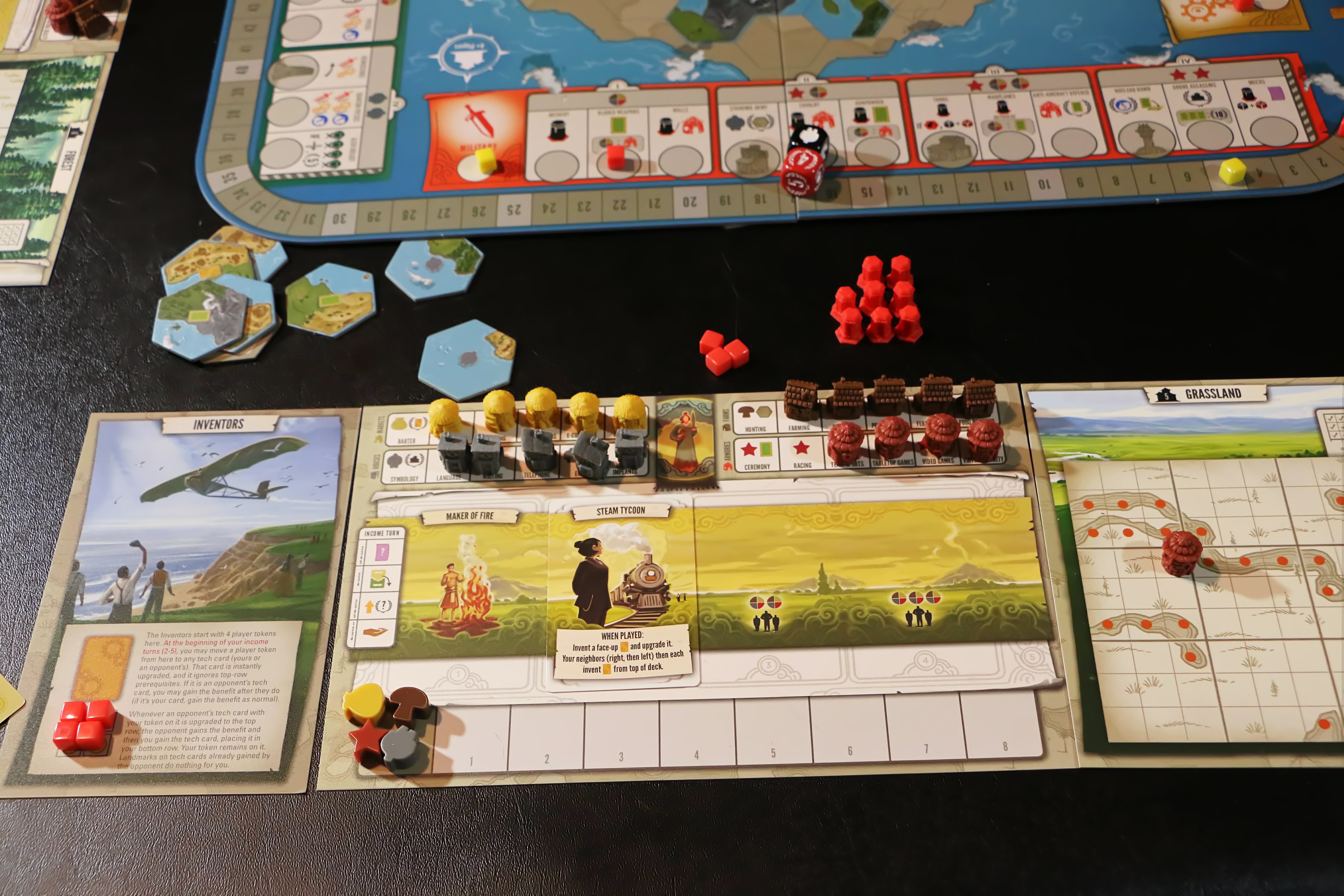
Five Tribes is a worker movement game. Every turn, you choose one of 30 locations, take all the meeples on it, and make a path, dropping a meeple on a location adjacent to the previous one, until you dropped the last one: on that tile, you take all the meeples of that color, do an action for the color of meeple, and for the tile you landed on, and if it’s now empty, you take control of it. On the first turn, you have about 6500 possible moves (that math might be wrong), and while that number goes down over time, it’s still a very open ended one. It doesn’t lake long before you start to figure out that some spots are better than others: a tile full of a single color is easy to empty, 5+ meeples on a spot allows you to loop, white meeples on a Sanctuary pays for itself. This allows you to go from 6500 possibilities to quickly identify the 4-5 most viable ones, which is a much easier analysis.

Alhambra is a tile laying game where you must buy tiles with money cards. If you pay with exact change, you get to play again. That’s an interesting choice for multiple reason: first, it feels great to chain two, three, four turns because you have exact change; second, it gives a lot of meaning to those small-value cards as a way to stay flexible; third, it gives you something to aim for during your first game -doing more is better, and paying exact change lets me do more! As you play the game more, you start betting on those less and less, but I think the mechanism still deserves a mention because its incentive is purely intrinsic: it feels good to play again.

Piece o’ Cake (which you may know under its newer name New York Slice) is a really interesting I-Cut-You-Choose game. ICYC games are quite difficult to do well at, because you kind of have to figure out what everybody wants to do to know which pieces they’d be interested in, and then cut it as to not give any one player a huge advantage. In Piece o’ Cake, each piece can be kept to compete for majorities, but also eaten for straight points (between 1-3, as many as there are dollops of whipped cream on them). Counting those dollops gives you an excellent first-level strategy: if there are 27 dollops, and 4 players, you’re aiming for about 7 dollops per share. From there, you can try and get clever: do you keep two pieces of the same type together, but give them a smaller share? Do you split up pieces of a type you’re strong in to keep opponents from catching up? I’ve played Piece o’ Cake close to 40 times, and I still use that measuring stick anytime I have to cut.

Endeavour has you gain tokens which increase your abilities, and they work by thresholds: if you have 0-1 bricks, you can build level 1 buildings; 2-3 is level 2, 4-6 is level 3, 7-9 is level 4, and 10+ is level 5. That threshold system is a first-level strategy in and of itself: you don’t want to finish the round just short of the next level. That affects the way you plan your turns, to make sure you don’t fall just short of the payoff, and since those thresholds are also worth points at the end of the game, it remains an important part of your strategic thinking throughout.


Think about your favorite game: what first-level strategy have you internalized about it? If you showed it to someone for the first time, and they asked for a few pointers, what would you say?

On the viability of game design as a full-time job

Today, I’m cheating a bit, and reposting a discussion I’ve had with Asger Granerud of Sidekick Games (who you probably know from Flamme Rouge and 13 Days) last year for his own blog. I’m hoping to do two posts a week, Tuesdays and Fridays, and maybe the Friday post would be with a guest?

So to start this, here’s that discussion about what is a goal, a dream for so many of us: making game design a financially viable use of our time. It’s more business/finance oriented than I want things to be, but as this week is focused on manufacturer quotes and contracts and finances, it’s honestly hard to get my head into more of a design state for the post. Hopefully this is still useful to y’all!

JV: We had a discussion last week were you said that you are a full-time designer, and that it’s “viable to make a living designing games”, which I was surprised by: I feel like it goes against the zeitgeist of “don’t expect to make money from your games”.

AG: I know several people who have earned a living wage from game design in 2018, and none of them had games published prior to 2016. However, I also know people who have worked hard, and still haven’t gotten one of their designs signed. I don’t want to come off as insinuating it is easy, nor that a quick fix exists: I just want to say that it is doable.

JV: What do you think is the difference between those two groups? Is it just luck or timing, or is it something those designers could improve on?

AG: Luck and timing is a factor. It wasn’t a given that Flamme Rouge and its sports theme would find a publisher, nor that the publisher could make it a success.

I think the advice I would emphasize would be twofold:
– First and foremost, you have to look at your games as products. You could make the best children’s game in the world, but if it costs €1000 to produce it doesn’t matter. Effectively each game you are pitching is a business case for the publisher: if they don’t think they can make a profit, they are not going to publish it.
– Second, play the numbers and embrace rejection: don’t design 2 games, design 20; don’t pitch to 5 publishers, pitch to 25. These steps will hone your design skills, your pitching skills, and will build you a network.

JV: Why do you think the perception that there’s no money to be made in games is so prevalent in the industry?

AG: I think it is because a lot of people have that experience. They design a game, sell it to a publisher, and see a little money come into their account, but rarely enough to make a significant impact in their life, and sometimes even less than they had in expenses getting there.

Most games get 3-5K units printed, and then never get a reprint. On average you are probably earning 0.80 USD per unit (that number obviously varies wildly), so that won’t cut it unless you have a massive output. If you want to work on this full time, your ambition shouldn’t be to make a game that sells 3-5K: you need at least a zero after that. I haven’t tracked it precisely from the get go, but my guess is my games have sold around 200.000 copies in total so far, with Flamme Rouge as my breakaway leader.

JV: Speaking of games as products, what do you do to ensure that your games are viable products?

AG: At the end of the day, the question is if it has a place in the market, but none of us have a crystal ball. With 13 Days we knew that we wanted a game that could scratch our Twilight Struggle itch, but in 30 min. We guessed there were many other folks out there that perhaps didn’t have as much time as they wanted either. For other games, it can be spotting a similar niche, but it could also be a component, mechanic or other hook. Regardless of your hook though, you still have to make a good game.

JV: Do you ever need to work on games that don’t excite you as much, just because they’ll sell or make good products?

AG: I’m blessed to be an omni-gamer. I have my personal preferences, but generally I just really like playing games. I wish I would actually “know” which games would sell, but I don’t, therefore I try to make games that will make people happy. Sometimes that can be achieved by nuclear war, other times it will be jumping frogs, or shaking meeples around in a box.

The process of design is a creative outlet I enjoy immensely, in and of itself. Personally I don’t need additional motivation beyond that and the goal of spreading happiness!

On your personal experience:
JV: When were you able to go full-time?

AG: I went full time on February 1st, 2018. I had been designing games since 2012, and signed my first contract in 2014. By 2018, I had about 10 boxes on the market.

JV: How much (if at all) did your experience at Games Workshop help you?

AG: Personally, I think the Warhammer Community was much more influential in forming me as a game designer than my 2 year stint at Games Workshop HQ in Nottingham. I have been designing tournament systems, restrictions, campaigns, and scenarios for at least a decade before I started designing games, and I had been consuming other people’s work in similar veins.

JV: And in terms of contacts in the industry, did either of those experiences help?

AG: So far it has not made any difference. I have tried using some of them in the past, but nothing has come of it.

JV: What does an average week look like for you as a full-time designer?

AG: I co-design all my games with Daniel Skjold Pedersen, and have been doing so since 2014. From Monday to Wednesday, we meet and work from 9 to 16 (4PM). It is a mix of design, development of existing projects, prototype production, and publisher contact. Every other Friday we have a playtest session, the Superhero Meet-up, that runs from 16-22. Our time is generally scheduled around getting something ready for next Superhero Meet-up.

On top of that, we also have on average two or so impromptu playtest nights a month when we are in need or want to shorten the cycle. These are typically with other designers in the Copenhagen community. Some work also makes sense to do without Daniel and I having to sit together, so rulebooks, graphic design and other tasks may land outside the fixed hours. Conventions are also part of this, and often we end up working 16 hour days when there.

JV: How do you and Daniel share the design responsibilities?

AG: There are differences in what we do, but more from differences in ability: I can’t draw a stickman without being ridiculed, so Daniel does that. However, I can use the adobe suite, so I do that. This is often time consuming, so Daniel ends up writing slightly more rulebooks than I do. It just happened organically, we didn’t really plan it that way, and regardless of the task, we bounce almost everything up against each other.

JV: How many games are you working on at any one time, on average? Are they at the same point in their designs?

AG: On average, we have 3-5 active designs at any one time, in very different stages. At the highest, I know we have had meetings in the past where we covered issues on 10+ designs in one sitting.

JV: How many playtesters are in your regular Superhero group, and how did you build that group?

AG: Semi regular numbers probably reach 15-20, but on any given Superhero Meetup, we will have 4-8 of those attend. To start it, we bought a bunch of snacks, drinks, beer, and pizza and invited lots of our friends and network. Then we made a few one-time open invitations in board game groups in Copenhagen, and if people showed up they got invited to return.

JV: With that testing schedule, how long does it take you to get a game from first prototype to a pitchable state?

AG: There really is no formula. It can be days or years. Children’s games tend to be based on a single strong idea, and sometimes that is all you need to pitch a game. Generally the process stretches when complexity goes up, but even so bigger games can still be sold without being fully developed. Assuming it stands out and is already solid. No need to sink hundreds of hours into developing a cowboy game, if the publisher wants a space theme. If your core design is pliable enough, developing after the sale ensures you can merge the theme and mechanics.

JV: Convention-wise, what do you prioritize?

AG: Nuremberg Toyfair and Spiel Essen are the permanent fixtures in our calendar, though they are so close in the year that we might ditch Nuremberg going forward. Our ambition is to do a US-convention a year as well. Beyond that, we do attend others, but more as gamers than as professionals, though the blessing is that even that is considered work!

On the pitching process:
JV: How do you handle relationships with publishers? The pitching process is already very stressful, I can’t imagine what it would be like if I knew my next meal depended on those contracts!

AG: First, I don’t think they are stressful at all. Pitching games is the most stress-free sales I’ve ever done, simply because you aren’t actually selling anything. At best they are going to take a prototype, then they are going to take it home and test it multiple times, with people that weren’t even present at your pitch: the game has to sell itself. Now I’m not saying there is no skill involved in a pitch, but I just feel that knowing the game has to prove itself regardless of what I do and say reduces that stress.

Second, my next meal isn’t dependant on that contract at all. If I sign a game today, I’m not going to be paid for it for 2 or 3 years. Right now I’m living off the work I did the past 5 years, not the work I’m doing tomorrow. Moreover, it is a numbers game: lots of games, more meetings, and even more pitches. But what you get most of all is refusal: I think Daniel and I pitched ~120 times total, across 26 meetings, just at Spiel Essen 2018.

JV: How do you handle pitching multiple publishers, and the delay while they have prototypes?

AG: We pitch to lots of publishers at once, and we never do sell sheets. At most, about 10 different publishers have had the same prototype of one of our designs. That being said, we try to avoid that these days, not out of concern for the publishers, but because we don’t want to make that many prototypes!

If a publisher then offers to sign a game, we tell them they will have to wait 4-6 weeks. We immediately inform all other publishers with prototypes of the deadline, and then wait. This process is fully transparent and we have not received any pushback from publishers.

JV: And have your ever had to deal with simultaneous offers?

AG: Yes, twice. We asked both companies for draft contracts, and looked through those. Though the details of the contract matter, they still cover 95% the same concerns in slightly different ways. We are not looking for a bidding war, we are much more interested in the second thing we ask them for: their vision for the product.

Also, it is much more important if they have the right partners, if they answer emails, all the intangible stuff that doesn’t go in the contract. Each game you design is a tiny lottery ticket financially: so many factors go into its final success that are completely out of your control. Therefore, I think the most important part an established designer can start focusing on is developing relationships with the best publishers. They will possibly impact the success of your game more than you will.

JV: You said you design 30 games, of which you get 10 published, 1 of which is actually getting you long term money. Could you elaborate on that process?

AG: First off, that is just a rule of thumb: Daniel and I are trying to track our work, and even when we succeed, our numbers aren’t exactly massive enough to be statistically significant, but 30-10-1 sounds right over a two-year period. I’ll try and look into it later in the year, and see if there are any trends. I also suspect our hit rate is going up.

JV: You also talked about selling directly to customers: is that something you have experienced? Is that something you plan on doing?

AG: A fully different topic, where we’re moving away from game design, towards publishing. Right this minute there aren’t any plans to do so, but if there was a project too niche to fit into traditional publishing, I would consider it. I do believe designers have a possibility of reaching their audience directly, and when doing so you probably need to sell a 10th to make a living.

The Healing Potion Effect

I’ll pre-empt your question: yes, this article is about board games. Eventually I’ll make a board game design point.

Scene: Smelly basement, five 20-year-old’s are huddled around a table covered in paper, dice, and cups of Mountain Dew.

Me: The Vampire appears behind you, coming out of one of the tunnels, and shoots rays of necrotic energy towards you two. You are surprised, and *rolls* just have time to turn around before you get hit. Falballa, you take *rolls* 28 damage, and Melran, you take *rolls* ahhhh, you lucky duck, only 4!

Vince (who plays Melran): I’m dead.

All: What do you mean you’re dead? You never told anyone you were so low on hit points!

Vince: Well I knew the Cleric was out of healing spell, what else could I do?

*A boss fight later*

Other player: Wow, and there still are some guards upstairs. I need some healing…

Vince: Melran has a healing potion on him, you can take it, he won’t need it where he is.

All:

Vince: What? I thought maybe I wouldn’t need to use it!

Me: But it was 4 points of damage that killed you… You were at 3 and thought you’d be okay?

Vince: I was at 2 actually.

Wow, what a setup. It will probably be longer than the rest of the post will be.

So, what is the Healing Potion Effect? The Healing Potion Effect is what happens when you give players limited uses of an ability that is of situational value, and they then decide to hoard them.

“But I can only use it once, what if it would have been better later?” is a crappy place to be in in a game. Whether it’s healing potions in D&D, an Event card in Pandemic, the “Discard and Redraw” token in Ginkgopolis, or a +1 in Ganz Schön Clever, we’re always worried there might be a better time for it in just a bit, and if we use it now we’ll feel like such idiots when that opportunity arrives, so we prefer inaction. But inaction is boring. You want players to do cool stuff, not to hold on to them until it’s too late!

First, what causes that paralysis? Why do we feel that way in Pandemic, Ginkgopolis and Ganz, but not about our Rerolls in Castles of Burgundy, or our Wood in Agricola? It’s rarity. You know that you will only have one token in Gink, and 5 Event cards in Pandemic, and at most 6 +1’s in GSC. In Burgundy, if I run out of rerolls, I can go get another one easily, and so I can spend them willy nilly. Rare is special, it adds that element of excitement when it happens, but it also means I want to avoid wasting it.

Therefore, how do you push players towards using those one-time powers? Let’s see a few ideas:

  • Put a limit on what you can carry: In Pandemic, you can’t have more than 7 cards in hand. If you hold an event card, you’ll need to discard Cities. Also, event cards can be played after you draw, which means the question is no longer “is this the best possible time to use it?”, but “is holding on to this card worth wasting a City card?”.
  • Define exactly how good it can be: In Five Tribes, if you play with the Artisans expansion, once during the game, instead of placing a Camel, you can place a Tent, which gives you one point for every Red tile surrounding it. At the beginning of the game, looking at the setup, you know exactly how much a Tent can be worth: again, it switches the question from the more abstract “is this the best possible time to use it?” to a more concrete calculation: “I could get 7 there, this is 5: is it worth missing out on 5 to maybe get 7?” In Pandemic, you can’t put a number on how useful skipping an Infection turn is, but you do with this one.
  • Make it get worse over time: In Sagrada, the first player to use a tool will pay a single gem, and others will pay two. You have very limited gems in Sagrada, but you still are pushed to use them early. You might very well wait until you don’t have a choice, but there is this slight incentive which you could get
  • Don’t make it so timing-dependent: After I wrote about making players feel clever a week ago, maybe this seems out of character. However, maybe you can make players feel clever by triggering the bonus, even if the bonus is always good: in Spyrium, for example, you get a bonus (either 5$ or a worker) when you reach 8 points. 5$ is always good, and you want the worker as early as possible (going back to Make it get worse over time), but when you can only get to 7, figuring out how to reach that threshold is enough of a puzzle: you don’t need to also optimize the payoff.
  • Don’t incentivize hoarding them: If an unused cool-thing-to-do is worth points at the end for not using them, you’re adding an extra barrier before using them. I did this with the power tokens in Off the Record, and quickly realized no one was using them: the question wasn’t only “can I get more out of it next turn?”, and it wasn’t even “is this move worth more than 3 points?” Instead many players just thought “I’ll keep them for the points and strategize about other stuff”
  • Make having used them better: I don’t think I’ve seen this done, but imagine this: You start the game with a mega power card. Once used, you flip it over and it becomes a passive bonus, or it increases your maximum hand size or hit points or the amount of dice you roll. Maybe I read about a game that did that? Have you ever seen that in a game?

All in all, the important part about the Healing Potion Effect, like many other things in game design, is that sometimes, you have to push players towards having fun: otherwise, they can forget that’s the point.

Tracks, tokens & score pads

I like score pads. I like that round at the end of a game where people tell me their scores, and we pay attention to who’s getting more points in each category, to the wild differences in some strategies. Then, we announce the winner and take a moment to look at the pad, which sort of tells a story about the game, about who used what strategy. Scoring pads are also a great reminder to new players of what is worth points at the end of the game.

I even made a Twitter poll to see who else liked Scoring Pads like I did:

Not that many people…

To me, there’s a time to use each of these:

  • Scoring tracks are for when most of the points come during the game, because it’s easy to move your marker during the game, and they make it very clear where everyone is situated compared to one another;
  • Tokens are for when a game either does not have a board, or when scores should remain hidden, and they give you a cool tactile aspect;
  • Pads are for when most of the scoring comes at the end of the game;
  • Memory is just a crappy method.

One game which defies these expectations is Between Two Cities. No points are scored during the game, yet there is no scoring pad; there isn’t a board, yet there aren’t point tokens. Instead, the game comes with a separate scoring track (which, by the way, is a great one to use with your prototypes), double sided with a snaking and a non-snaking side.

Picture from BGG user Sadistiko

I therefore reached out to the publisher, world-renowned awesome guy Jamey Stegmaier, and we had a really interesting discussion about this topic which he’s allowed me to share with you folks. I’ve sprinkled a few comments here and there. Enjoy!

JV: One of the things I think is not discussed enough is the impact of component choices on game design. You’ve been very forward about selling not only a game, but an experience, whether it’s the table presence of Scythe or Tapestry, or the tactile aspect of the dice tower in Wingspan. One thing I’m intrigued about is the choice to go with a score track rather than a score pad for one of my favorite games, Between Two Cities. Was it pitched to you with a track, or did you decide to go that route in development? Can you talk about that process and why you made that choice?

JS: It’s been a while, so I honestly don’t remember if the track was my suggestion or something that Ben and Matthew proposed. I do remember, however, discussions about how we could create a collective experience at the end of the game instead of the more private score pad experience. We found that using the track felt like a race at the end, which was fun, so we stuck with it.

I do agree: one thing that can happen with score pads is that one person catches all the numbers, then adds stuff up while others talk about their weekend, and then shares the result: by then, nobody cares. I don’t think it’s universal: I usually have people caring about the numbers they call out, going “How can you score 48 for your frogs, I only got 18 and I had almost as many as you did!”, or patiently waiting until they can drop their “yes, 8 magicians times 12 runes is 96 points” and everyone’s jaw dropping.

But there also have been times where no one really cares. If I had to guess, it’s either because they already knew the end result (or at least that they weren’t in the running), or because the accountant did it all privately. Or maybe some people just don’t like it, and that’s okay too.

JV: Between Two Cities’ central conceit, the “Score your lowest city”, means that there’s this extra step between scoring the cities, and then determining the winner. Is that part of why you pushed for the track?

JS: I think the visual of the track helps to identify your scoring city, but that mechanism wasn’t a primary motivator for creating the track.

I also want to mention one of my favorite aspects of the track, which is that it’s double sided with snaking scoring on one side and non-snaking scoring on the other. One of my friends and playtesters greatly prefers score tracks where it’s really easy to jump up in increments of 10, hence why we offered that option.

JV: Since you offered both, how many people would you estimate preferred the snaking vs non-snaking track?

JS: I’m guessing more people prefer the non-snaking track.

I personally have a strong opinion about snaking vs non-snaking. I think snaking tracks too often lead to errors while counting, where you go back instead of forward, or up a row to do +10 but actually get +20. I definitely side with the non-snaking.

JV: Between Two Cities has a player aid with the 6 building types and how they score, which suggests scoring them in that order. Why did you go with that order? Did you playtest other options?

JS: As far as I can recall, I think Ben and Matthew selected that order because of how playtesters perceived the value of the different buildings. Mathematically they’re almost perfectly balanced, but player perception is different. Playtesters perceived houses to be more valuable than shops, so shops were the first tile tiebreaker (and houses are the last).

C’mon, we all know Houses are stronger Jamey!

JV: For Between Two Cities’ younger-yet-bigger brother, Between Two Castles of Mad King Ludwig, you decided to go with a score pad instead of a track. Why is that?

JS: The scoring of Between Two Castles is much more involved than Between Two Cities. Instead of scoring groups of tiles one at a time, you’re scoring each individual tile. Scoring would have taken a LONG time in Castles if it was done collectively.

JV: Overall, Stonemaier games have used multiple components to track scores: coins/tokens (Scythe, Euphoria), tracks (Tapestry, Viticulture, Between Two Cities, Charterstone), score pads (Between Two Castles, Wingspan). What feature of a game makes it a better fit for each of those?

JS: As you can tell, I generally stay away from score pads, but sometimes—particularly in games where there is no board or scoring resource like the coins in Scythe—it’s simply a good backup to use. I think tokens are nice because they obfuscate the winner—that’s good in games with direct player interaction. A track on the board is nice it’s really important to see scores at any given time or when scores can grow quite high. For Tapestry for example, I knew it was going to be a high-scoring game with scoring throughout the game, so I don’t think I considered anything other than a track.

The amount of points is interesting and something I hadn’t considered. In games with scores in triple digits, you need a LOT of tokens of different denominations to keep track of it all, and it gets into change making, and that’s all quite annoying.

While I had one of the great designers of our era with me, I veered the discussion in a bit of a wider topic:

JV: Did you go through a similar process with the resource tracks in Tapestry, vs using bits/tokens?

JS: On the tracks, I thought the resources would feel more macro—a broad look at your civilization, opposed to games where you’re collecting individual resources by harvesting, cutting down trees, etc.

JV: Oh, I hadn’t considered that at all! I wasn’t a fan of the tracks –I like to be able to plan out my turns by physically grouping the resources I’ll need to pay–, but it does give that macro feeling!

JS: Ah, that’s an interesting point about planning for your next turn. It’s a good thing for designers to consider! You should probably mention that in your article.

Guess I will! Especially in games where you get LOADS of resources in one go, and then have to then plan your use of them in the near future –like Terra Mystica, Underwater Cities, or Tapestry–, I much prefer being able to move them around to make sure I don’t budget the same stone in two places. That being said, this is a great example of Adjective theme.

JV: Did you go through a similar design process with other components in your games? Wearing both the designer and publisher hat, how early in a design do you consider the component types you’ll use?

JS: In terms of components in general, I think about them from the earliest stages of design, as I strongly believe in the power of a component hook (and components that make it easier to play and remember how to play a game). I don’t think that necessarily carries over into the scoring mechanism—that’s often one of those components that the game evolves into (I haven’t ever designed around the scoring mechanism itself).

JV: This was very helpful. Thanks for agreeing to this!

Wasn’t that fun? Subsurface Games’ first guest feature!

Lessons from: With a Smile and a Gun

When I started working on this blog, I thought I’d alternate between Lessons from current designs and more theoretical, academic-ish stuff. However, I’ve tended a lot more towards the academic style: it’s sort of what I default to when I sit down to write. It also means it’s mostly been enormous articles. So today, I’m doing a more anecdotal one, and hopefully it will be much shorter. Hey! No laughing!

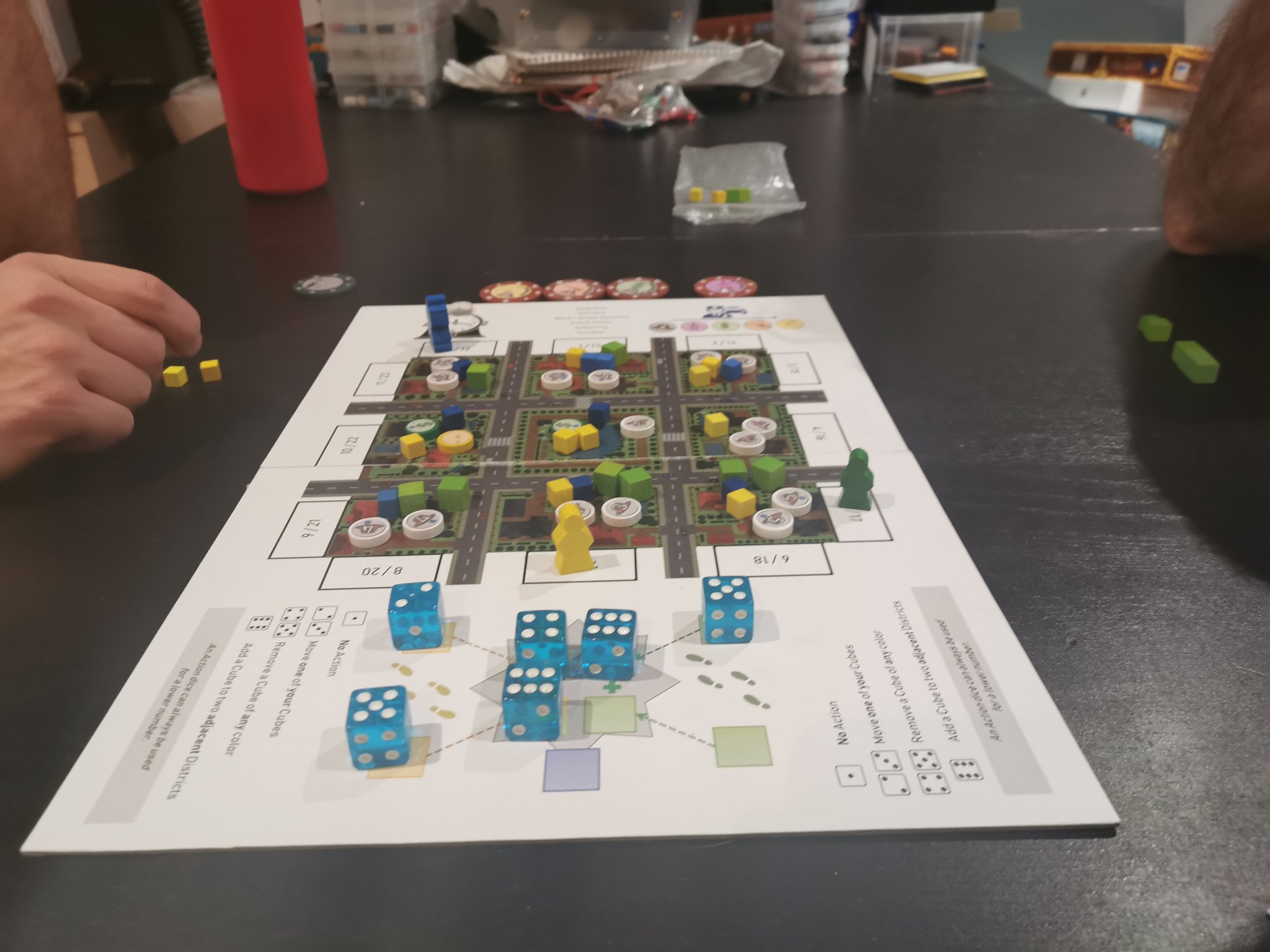
So quick overview: With a Smile and a Gun is a 2-player dice drafting game of area control. It is set in the Prohibition Era and puts the heads of two rival crime syndicates head-to-head to control it. It’s named after a famous line by Al Capone: “you can get far in life with a smile, but you can get a heck of a lot farther with a smile and a gun”. I think it sounds awesome. It’s the third game I’ve started working on, and I’ve learned a LOT of stuff along the way.


Lesson 1: Make the game’s core solid before playing with special abilities. If special abilities are ways for players to break the rules, it makes sense for you to design them after the rules are set. With WS&G, I knew I wanted a layer of variability and for the players to have special abilities which varied from game to game, so I added it from the get go. In the end, the core of the game worked, and hasn’t changed much since, but I only knew that when I ran 3 back-to-back playtests without the ability, after 10-15 playtests with them. Even now, with this game I know like the back of my hand, any change to the core mechanism means a few tests without the abilities.


Lesson 2: Decisions are good, but they take time. For the longest time, winning a district gave you a choice between two scoring tiles (which were different set collection things), and second place took the leftover one. It seemed like an interesting choice to make, but it also meant the scoring phase took as long as the action phase, but wasn’t half as interesting. I therefore changed it to be MOSTLY straight up point values, and a few of the set collection tokens. Most of the time, you’re taking the highest value, but once or twice a game, you’ll have a tougher decision. Once or twice a game is fun, tense moments, but thirty times a game isn’t.


Lesson 3: Value of a majority for 2-player games. When I made the switch to point values, they were worth 5-10, and most of the special tokens were majorities players were competing for. At first, I calculated that if there were 5 tokens available, you needed 3 to get the majority (ish, there are ways to get rid of some), and so set the value at 21: it’s average if you need 3 tokens to snag it up (7 points each), but if you can take it in two, it’s incredible. In practice though, what happened was that every single token of that type became worth 21 points: whether you controlled the majority and needed to block your opponent from catching up, or the other way around, you were fighting for that 21 point swing. On the last round, if you were tied 2-2 and the last token showed up, it was worth more than twice as much as any other token. Therefore, I gave them values of 8-10-12, more in line with the other tokens, but a bit stronger because they weren’t sure things.


Lesson 4: Piles of 10. When I made the switch to point value tokens, I went with values from 5-10, and majorities worth 8, 10, and 12. I liked that it gave me 6 different amounts for straight points, which led to a lot of variety. But at the end of the game, scoring often took a lot of time, because players couldn’t do the go-to scoring method: piles of 10. Not enough smaller values meant needless math. I switched it to values between 2-6, which really didn’t change much gameplay-wise, but now calculating scores at the end of the game takes a fraction of what it did.


Lesson 5: The impact of presentation. With those majorities, one thing that came up is that if your opponent gets ahead, there’s no point in you catching up. Therefore, eventually I added a second place value so you at least wanted to get one (or block your opponent from having it): instead of 10 points, it was 20 for first, 10 for second. It meant throughout the game, the competition was tough: either you were fighting for first place, or fighting to gain one of those tokens to get second place. And since those majorities are played on, at most, 6 tokens, it was always tight. However, players didn’t really like the “consolation prize” aspect of the second place. It never felt nice to get.

Since I loved the mechanism, I just re-branded it. Instead of 20 for first, 10 for second, I added Monopolies: majorities are worth double if your opponent doesn’t have one. Mechanically, it’s still the same thing: it’s a 10 point boost for first, and a 20 point boost if you’re alone in it. And that part, players LOVED. Someone even called it innovative –which of course I didn’t correct, finally somebody recognizing my genius! All of which came from this little bit of presenting those same bits from a different angle.


Of course, I learned many other things while working on this game, but these felt like the more universal. Hopefully I can remember to make this sort of thing in the future, and make the “Lessons learned” a series of sort! Hopefully you found something in there that can help you!

Making VPs!

Early in the design process for Cartographia, we were brainstorming action ideas for the multi-use cards. Our first idea for Knowledge didn’t really work. We were looking for something else -Ships allowed you to explore, Diplomacy to gain extra actions, and Gold to gain extra resources-, and decided to make it a way to gain points! A different path to victory, isn’t that what everyone wants in Victory Point games?

However, just giving you points for playing a card was… boring. Not only did players feel rewarded for no reason, but there was no way to feel clever for playing it. There was no “right” time to play it, and since everything else did have a timing element, the Knowledge action became the option for when there was no smarter move, which always fell flat. In the end, after trying a few things, we ended up adding a Tech tree, with Knowledge being the main way to gain those techs.

This is only an anecdote, but it’s something I’ve often run into, whether with co-designers, or when testing another designer’s prototype: giving someone straight up points is boring. You can never feel clever for doing it, you never feel like you’ve achieved anything. It is, to me, the difference between a Point Salad and a Euro game, and a question of preference more than one of quality.

Some people will call all or some of these Set Collection: yup. Many of these are ways to score set collection. A reviewer would describe all of those as “Set collection stuff”. I have my own opinion on what is and isn’t set collection, but I find discussions of terminology tedious and of little interest.

Regardless, this was already a long enough intro: here are ways to give players VPs which are more interesting than a simple “here’s 5 VPs!” I’ll use the word “asset” as a catch-all terms to include Tokens, Cards, Resources, or any other piece you obtain in the game that is worth points.


Increasing payoff

Description: Every board gamer has seen the triangular sequence: 1/3/6/10. The more of a thing you have, the better.

Examples: Masks in Teotihuacan (1/3/6/10/15/21 for different types); Science in 7 Wonders (for each type, score X2); Holding cards in Greed (each type you build a holding, it is worth 10k for every other icon of that type you have)

Pros: It makes the assets worth different amounts to each player. It gives you a sense of growth through the game: what is worth 1 or 2 points early on might be worth 20 at the end of the game. You can decide to rewards specialization (which is easy for players to recognize) or diversity (which ensures that players do a bit of everything).

Cons: It’s the most common because there really aren’t many. Rewarding specialization can mean players each choose their own thing and never compete with one another, and diversity can be harder to visualize (“which one am I missing again?”). It often requires a chart to count points.


Decreasing Payoff

Description: The opposite of Increasing Payoff. You get a lot for doing a little of something, but every extra step you do is a smaller bump; Games with negative points for not having done something.

Examples: Income in Power Grid (10-22-33-44-54-65-73-…); Income in Brass (which increases every step early, then every other step, then every third step…).

Pros: Pushes players in doing a bit of everything (because specializing gets less interesting); acts as a catchup mechanism.

Cons: Often lacks excitement, especially late in the game (unless you haven’t done it yet!) Some players will criticize it for being a catchup mechanism. It often requires a chart to count points.


Thresholds

Description: There are multiple ways to present thresholds to players, but the idea is always the same: if you get points for having X, there are some numbers which pay off a lot more than others.

Examples: Sashimi cards in Sushi Go (10 points for every group of 3); the Military track in 7 Wonders Duel (which scores for the differential: 2 points for 1-2, 5 for 3-5, 10 for 6-9, and an instant victory for 10); the Scoring tile in Isle of Skye which gives you 3 points for every column with at least 3 contiguous tiles; any game with contracts to fill.

Pros: It adds tension right before you reach that threshold. If you have two Sashimi cards and need that third, people will try to keep it from you, and you’ll try to figure out a way to get it. It’s quite similar to Increasing Payoff, except that that increase comes at specific points, making those REALLY important.

Cons: You can be screwed out of that final asset (whether by luck or other players), which is not always fun. If that threshold is important enough, the last turn can become ALL ABOUT IT, with nothing else mattering.


Majorities

Description: If you have the most of asset X, score points. I’ve written 3 posts about various twists on Majorities in games, so I won’t fill up this section, but I have a lot to say about them…

Examples: So many… Contracts in Clans of Caledonia; Empire scoring in Terra Mystica; Engineer scoring in Russian Railroads; Round scoring in Wingspan

Pros: Easy to understand, interactive, dynamic. Can be played on multiple levels of involvement (a casual “Let’s have the most!”, or a more strategic “is it worth having the most, or should I settle for second place?”)

Cons: Can lead to large investments that are worth very little. Hard to evaluate the value of stuff, because it’s unclear which position you’ll reach.


Races

Description: First to have asset X gets a reward, or first to have asset X gains a lot of points, then second gains a few points, and third gets even less (or nothing!), or first to have asset X gets points.

Examples: Nobles in Splendor; Museum spaces in Mykerinos; Speed bonuses in Meeple Circus; Family bonuses in Elysium.

Pros: Interactive. Gives you a direction early in the game, and most likely puts players in competition early, which means TENSION! At some point, it’s in the bag, so you avoid that constant one-upping that majorities sometimes lead to.

Cons: If it’s settled early, it becomes a non-factor later on. That’s fine if it’s meant as an early objective just meant to give players directions, but if not, it can lead to the game outlasting its welcome once players know who will win.


Multipliers

Description: Score 3 points for every asset of type Y you have, or for every asset of type Y around the table (in addition to what those would score normally).

Examples: The scoring board in Nippon (assigning multipliers to each category on income turns); Scrolls in Isle of Skye (which are doubled if the zone they’re in is closed off); Round objectives in Clans of Caledonia (which are evaluated at specific times and not at the end of the game).

Pros: Give each player a different specialty. Is useful to get early (to give you direction) as well as late (when you know exactly which multiplier is best). If it varies from game to game, increases replayability.

Cons: If scored after the end of the game, can lead to lots of anti-climactic accounting. If each player scores for different things, it can mean players don’t interact.


Timing dependent

Description: The value of those scoring changes over time. When to score it is what matters.

Examples: Shares in 18xx games (the value of which changes as they are sold and bought, or as they pay dividends); Production in Navegador (when you produce, you will push the value of those goods on tracks, making them vary in value); Palm trees in Silver & Gold  (which score 1pt per Palm Tree on cards in the drawing display at that time); Building the Pyramid in Teotihuacan (which is worth 1pt per level of the piece, +1 pt per icon you cover with an identical one).  

Pros:Rewards flexibility. Since it’s a question of optimal timing, you can’t make perfect plans, as stuff will happen which you need to react to. Not being able to plan perfectly can help limit Analysis Paralysis.

Cons: Hard to plan ahead, which can push AP -yeah, this is often a mixed bag on that front. Also, makes it hard to compare options, since their values are so fluid.


Whenever I think of scoring elements, I try to limit straight-up points and use one of these options when necessary. You can even combine two of them for a single asset: the tracks in Railroad Revolution increase your scoring multiplier when you reach certain thresholds; the Science cards in 7 Wonders score by Thresholds for variety, and by increasing payoff for specialization; the Museum spaces in Mykerinos are multipliers you’re racing to get.

I usually would advise new designers to keep it simple, and only add a rule if the game is much worse without it. In this case, I would advise the opposite: unless you have a specific reason to, I think you should avoid straight-up points.

Did I miss any category, or particularly good examples in one? What is your favorite scoring mechanism?

Grammar and Theme p5: Adjective theme

So far we’ve talked about Noun theme (how you name the stuff in your game and how it relates to the situation you are presenting), Verb theme (how you name the actions in your game and how it relates to the situation you are presenting), and Adverb theme (the feelings evoked by the gameplay and how they relate to the situation you are presenting). Today we’re talking about Adjective theme, or how a board game looks. It’s not about how good the art is, or how impressive the minis are: it’s about whether or not the components support and enforce the other three types of theme.

Now I have to admit, for a long time, I sneered at players who would think of components as theme. “Oh, look at those minis, so thematic!” sounded like kids who get their first non-picture book and wondered how they were supposed to get the story. Then, as I got my first game signed, and started thinking of self-publishing, I started thinking of those components more, cand… oh boy should I have thought of them earlier.

Art Style

Think of all the games which look somber and serious, but then are dynamic and quick-paced, or the other way around. One of the best examples is the Bruno Cathala card game Crazy Penguins, which is a quick but thinky card game of machiavelian intrigue and tense strategy. It’s about giving your opponents cards so they can fight each other and leave you alone. It’s an amazing game that evokes Game of Thrones, but instead is… ridiculous, cartoony penguins.

Picture from StudioBombyx.com

The art style here does two things: first, it attracts casual players who are then turned off by the gameplay, which is all nuance; second it suggests to the hobby players that this is a game to be played on a light and chaotic level. And of course, it can be, but then it’s just one more card game. That extra level of strategy, where it becomes interesting, is one for which the game’s look gets in the way.

On the other side of the spectrum, have you ever tried to get muggles to play Ethnos? It looks serious, it looks dark, it looks like those strategy games where you stare at each other while contemplating the board, yet it’s a quick-paced game of card play and combos, which every fan of Ticket to Ride should give a shot to.

If you want to look at better combinations of Art Style and theme, good examples on the silly side are Camel Cup or Potion Explosion, and on the serious side you have games like Godfather: Corleone’s Empire or Goa. Overall, most of the big hits are game where you have a good idea of the feeling of the game when looking at the box – that’s how you create an expectation you can fulfill, after all.

Component Choice

But art style is not the only part of Adjective theme: so is component choice. As I said in the Noun theme post, having realistic resources really supports the theme, because it enforces the vocabulary you want players to have, but it also goes beyond that: I recently had a discussion with an indie game designer by the name of Jamey Stegmaier (if you don’t know him, you should check him out: the kid has potential!) I asked him why he decided to go with resource tracks, rather than resource tokens, in his Civ game Tapestry.

Jamey: On the track, I thought it would feel more macro–a broad look at your civilization, opposed to games where you’re collecting individual resources by harvesting, cutting down trees, etc…

Image from StonemaierGames.com

And it is true that having the tracks, instead of individual pieces, gives that sense of scale: while the scale of resources in games are always abstracted (how many dead trees does this one brown cube represent?), having a physical piece does make suggestions, specifically when, like Stonemaier usually does, the pieces are realistic representations of the bits in the game world. It’s pretty easy to assume that drum of oil in Scythe represents a single drum of oil.

Overall table presence

Sometimes, art and components are both on par, but the overall game still feels off. Michael Kiesling’s Vikings is a great game, but it’s one of the most unthematic games out there, failing on all four types of theme.

Image from BGG user Pouringraine

As you can see in that picture, like every Viking chieftain ever, you are filling up a grid with islands to place different types of vikings of them. And like in real life, islands (which all are parallel lines) can only contain vikings which share a job: you wouldn’t put a Soldier on the same island as a Chef, of course!

But looking at that picture, does it look in any way thematic? Does it suggest a Viking theme at all? Of course not. It suggests abstract. It’s not the meeples (the horned helmets are a nice add honestly), nor the art (which I really like), it’s the fact that the game looks like a grid. You can look at that picture and learn a few of the rules, which is great from a gameplay perspective, but takes away from the theme.

Anecdote time!

My first design, Cartographia, is a game about mapping the world in the Age of Discoveries. You discover parts of the world, and once a region is discovered, it can be mapped by spending resource cards, in which case you had a token to the board to say it’s mapped.

The night before the pitch that led to the game’s signing, we played a game with new players so I could practice teaching the game, and make sure we remembered everything about it -the game had been with other publishers for a while, so we hadn’t played it for several months. And throughout, those new players referred to mapping as “building”. We corrected them, but it still wouldn’t sink in. Crap.

After the publisher signed the game, he brought up that exact point, and together we brainstormed a great fix: that token you place on the board would come from a dual-layered player board: under would be the drawn world map, and the token on top of it would be a blank piece of paper. With that change, when you take the token to go place it on the shared board, you also reveal the growing map of the world from your personal player board.

Wow, imagine how cool a picture of it would be right now! Hopefully, my words have done the idea justice and you can see it. Since that change, people never use a word other than map.

Conclusion

This was the last of the Grammar as Theme articles. Hopefully it was helpful to some of you in breaking down the various ways in which a game’s theme can be revealed, and therefore what people mean when they use the term.

I’ll switch gear to something else for a bit, but eventually I’ll come back to this and discuss how the theme of my own designs evolved over time along those four axes.

Theme and Grammar p4: Adverb Theme

Now on to Adverb Theme. If Verb Theme is how closely your decision process as a player matches that of your avatar in the game world, Adverb Theme is about the emotions that come up during that decision process, and how they match the emotions suggested by the theme. As a game designer, they’re a level removed from your control, because they are, of course, dependent on the players. In the Noun theme post, I talked about the frequent criticism that some games are themeless because they could be about anything: while sometimes that’s a comment on the game’s setting (“Sure, you’re building a medieval castle in Italy, but you could be building a Colony on Mars or a Bee Hive”), it’s often about that feel.

Because this subject is by nature more abstract, let’s dive in what I think is a perfect example: Lost Cities. Actually, before I went with the Grammar shtick, this whole series started with what I call “Knizia theme”, and Lost Cities is one of its best, and most well-known, examples. Still, a quick overview of the game if you don’t know what it is:


Lost Cities is a card game themed around expeditions. Players are rival entrepreneurs who fund explorers to go around exotic locales and bring fame and fortune back. Or artifacts? Or maybe it’s taking pictures and posting them on Instragram. Who cares, really? The game is abstracted to the bare minimum, and many would call it abstract, with that “it could be anything!” Yet, I argue, it couldn’t: that theme is the perfectest fit.

Picture from BoardGameGeek

Mechanically, the game offers 5 suits, each containing cards numbered 2-10, and 3 Handshake cards. You can play cards in your tableau, as long as they are higher than the number of the last card you placed in that color, with Handshakes having to be played before number cards. At the end of the hand, you score each color in which you played, adding up the cards, subtracting 20, and, if you have 1, 2, or 3 handshakes, doubling, tripling, or quadrupling, respectively -which could pay a lot, or, if you run short, could cost a lot. You also gain 20 points if you play 8 cards of a color. The game is mostly about not giving your opponent cards they need, not showing your opponent what card you need, and fighting against the clock of the deck running out.


Now the noun theme is barely existent: the cards represent advancement, the handshakes represent how much funding goes into the thing. There’s no money, no explorers, and the adventures are nothing but rows of cards. The verbs aren’t even clear in what you’re doing thematically: drawing cards and playing cards isn’t what I think of when I think of planning an expedition. The game is a lot easier to understand in abstract, mechanical terms: it’s almost impossible to teach it with any hint of theme.

Yet, if I were to describe the experience, I’d say it’s a game about taking risk, about deciding when to pull the trigger, based on incomplete information, and going from planning to action: you can’t wait until you know exactly how it will end before you get started. It’s a game about hedging your bets, about knowing when to go full throttle and when to take your time. It’s a game where you don’t directly hurt your opponent, but if you fall on something they need, you bury it deep. It’s a game about sometimes digging deeper and finding a gem, but more often then not you get something of little importance. Doesn’t that sound like expeditions to unknown lands? Like funding archaeological missions?

Many games described as Abstract thrive on Adverb Theme. Individual mechanisms seem abstract, yet the experience the game delivers is described in terms which clearly resonate with the theme. Sure, Lost Cities could be about funding start ups in Silicon Valley, or any other situation where you take risks based on limited information. Likewise, whether it’s finding cures while controlling the diseases’ spreading, closing portals to Hell while fighting demons, building pumps while controlling raising water levels, or negotiating alliances with barbarian leaders while defending Rome from their attacks, Pandemic is a game about trying to progress on long term solutions when you have time in between two emergencies. Are they less thematic because the Noun theme could be changed?

What do you think are other good examples of Adverb Theme, games where the actions and mechanisms are not necessarily good matches, but where the theme perfectly fits the emotional journey you go on during a game?

Theme and Grammar p3: Verb Theme

Now on to Verb Theme. If noun theme is the labels of the stuff, verb theme is the label you use to describe what you do in the game. The whole “Grammar theme” schtick really started with the verbs, inspired by Rahdo’s use of verbs to describe categories of games based on what you do in them. This question, to me, is a three-step process:

  1. What do you do thematically?
  2. What do you do mechanically?
  3. How closely are 1 and 2 related?

Now some games are perfect matches, and others are more on the WTF side. Truly, it’s a question of abstraction: as you try to fit a real-life situation into a 30, 60, or even 240-minute experience, you have to cut stuff out, and the more you cut, the bigger that divide gets. Battleline is a game about strategic combat, about planning where to send troops to react to your opponents. However, how much of that can you fit in a 20-minute card game? How can you fit something that evolves over months, something that takes a lifetime to master, to a game that you can teach in 5, play in 20, and not feel completely overwhelmed? By cutting stuff out, by abstracting large situations, by limiting the game to a manageable lot.

Picture by BGG user Charlescab

The games usually most held up as thematic are combat-heavy games centered around verbs such as Kill, Destroy, Annihilate, Exterminate, and other synonyms. If you look at the Thematic category on BoardGameGeek, that’s mostly what you’ll find. Of course, a game about combat, where you control pieces which attack your opponents’, well that’s a pretty close fit. I’m farther away from the action, I have all the time in the world, and a much clearer, bird-eye view of the battlefield, but the decisions I’m making are still the decisions a heroic knight, a Space marine, or a lieutenant would take.

On the other hand, my beloved Euros, about Building a castle in the European Middle Ages: what do you actually do? You’re actually building stuff. You’re collecting resources, then pay those resources to gain a card or tile representing the building you’ve built. It feels like the actions you’re taking in Vinhos, Brass, or Agricola, are pretty close to the ones you’d be taking in real life if you were in those situations as a Winery owner, British industrial, or medieval farmer.

Then, why are those games not seen as thematic?

I think the biggest difference is not in what you do, but how you get to do it.

In Memoir 44, the main verb is Fight, and that’s what you do. How do you fight? Well you play a card, move units around, and fight. Sure, the cards you have in hand do limit what you can do, and you have to plan around them, but the main thing you’re interacting with is the Fight.

Picture by BGG user RicMadeira

Then, you have games like Teotihuacan -and before I crap on it a bit, I have to point out I really like it! However, as much as I like the Teotihuacan for its tough decisions and the strategic and tactical thinking in it, it is pretty unthematic. Teotihuacan is a Build game: you even have the physical Pyramid getting built throughout the game. It’s a game about getting stuff and turning it into buildings: so far, so good. However, there’s the whole rondel/dice worker stuff: do you imagine Mayan leaders planning the building of a pyramid based on how the work sites were disposed in a perfect circle around the city, and how workers could only go so far, and how you had to plan them going to the same action exactly on the same turn? And how they couldn’t walk counterclockwise? Were Mayan cities built on that hill where our grandfathers went to school, where you had to walk uphill both ways? Were they built on that Mobius strip staircase from Inception?

Not only is the mechanism unthematic, it’s also the main thing you’re thinking about during the game. Any fun you have during the game, it’s not about getting stone and building stuff: it’s about getting all your 5s on one spot, getting a huge action, and triggering a scoring phase early because two of those 5s ascend. Sure, the Build part is thematic, but it’s not a Build game: it’s a Plan game. More accurately, it’s a Solve game, where not only do you plan your moves -you plan moves in every game-, but you solve the optimization puzzle presented to you. That Solving the main thing you’re doing, the main thing you care about, it’s the main thing differentiating it from the hundreds of other games which you could describe as “get wood, get stone, build stuff”. And that Solving (which again, is so fun and I love it) is absolutely unthematic -not that Mayan leaders didn’t solve problems, but that the things we consider during the game have absolutely no relation to the things our avatars in the game would.

So that’s the thing to keep in mind: Verb Theme is about how tightly what you do in the game world represents what you do in the real world, but you can’t limit it to the effect of those actions. Given that we interact with the board game through the decision we make, its that decision-making process we have to look at: how close is that decision making to those our avatar would take?

Theme and Grammar p2: Noun Theme

Theme & Grammar is a series in which I explore different facets of theme in board games. Click here for the overview.

So Noun Theme, as I said last time, is the labels you put on stuff: this yellow cube is gold, and this grey one is a soldier, and this track there is your Political power. If you were to retheme a game, from Star Wars to Game of Thrones, or from spice trading to golem building, this is what you’d change.

Noun theme is the vocabulary used to describe the pieces in the game, which means it’s the concepts we use to make sense and learn the game, and the vocabulary we use to talk about the game.


Learning: Compare these two sentences:

  • You take a yellow cube on this action, turn it into a pink cube on this other action, and at the end of a round, pay 1 pink cube for each action you took.
  • You get wheat at the Farm, turn it into food at the Bakery, and at the end of a round, each of your worker eats one food.

Which of those do you think will be the easiest to learn? Of course, having that thematic vocabulary means it’s easier to make sense of the concepts the game throws at us. However, theme doesn’t help on its own: it’s only how well it represents what happens in the game:

  • You get a Gold at the Rocket ship, turn it into a Pollution at the Zoo, and at the end of a round, each of your Wizards makes one Pollution disappear.
  • You get a Schmamuul at Ozarakas’ Hut, turn it into a Gom Gom at the Darikan Academy, and at the end of a round, each member of your Kerra costs you one Gom Gom.

Does that help? Of course not. There’s no logical relationship to base your understanding on in the first, and the second is only gibberish. These examples are more egregious, but my point is that this vocabulary is a huge boon to learning a game, and therefore, should be used as the tool that it is: a weird, bizarre theme has certain advantages, but it definitely loses points on this one. Daniel Solis (who by the way is an amazing follow) talked on the GD of NC podcast (other amazing resource) about how Junk Orbit used to be a game about aristocrats putting catapults on Penny farthings to throw piles of cash to each other, which is an amazing theme and would get me to sit down, but most likely doesn’t help people understand the game. The same statement is true about using proper nouns, especially from a set fiction that not everyone knows, for whom it’s basically still gibberish.


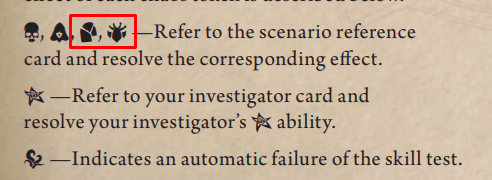
Talking: After we’ve learned a game, we still use that vocabulary: we ask questions, we read card effects, we describe actions, we ask others to pass us specific bits which are out of reach. It’s what makes games which over-rely on complex icons, and never name them, so frustrating. As much as I love Arkham Horror LCG, I get angry when I draw one of the unnamed shapes.

“What did you draw?” “A… plane with… tails?”

I also think there’s a large spectrum of how thematic the vocabulary of a game is. If you play Splendor on a large table and can’t reach the stacks of chips, do you say “I’ll take two emeralds,” or “two greens”? On the other hand, in Scythe, do you ever say “This costs two browns”? In Terra Mystica, do you go up the blue track, but in Endeavor, you go up the Money track. Some games don’t bother naming the resources, but others barely go further. What pushes you one way or another?

  • Thematic use: You use wood to build stuff, and food to feed your worker. That means that the terminology you use follows the narrative: it’s why we say “wood” in Agricola, but “green” in Splendor.
  • Interchangeability: You go up on tracks to represent your advancements in both Endeavor and Terra Mystica. In Endeavor, each track has its own use: in Terra Mystica, they’re all the same. Sure, objectives evaluate one rather than the other, but that’s not an inherent difference: it’s a difference in what other stuff requires. When I teach the game, I say “these tracks all help you with objectives”, but in Endeavor, I have to point out “this one helps you get workers, this one helps you pay for your workers, this one…”. That is proof that they are inherently different.
  • Component: So obviously, calling a resource by its color is the shorthand we use to refer to them when the theme doesn’t help. That being said, in games where the color is not the bit’s main feature, you will call them by their name. It’s why we say “Oil” in Scythe, even though the resources are all mostly interchangeable: what else would we call it?

This type of theme is where a lot of Euros get criticized for “pasted on theme”, mainly with the criticism “it could have been anything”. Of course, a game about building a city could be about building Florence in the Renaissance, a Colony on Mars, a stone age village, or the lost city of Atlantis, or the Capital of Raghuerikka after the Gerrass destroyed it in the last age: as long as it’s about building a city, only the words will change. So why do we have so many Euros going with the boring Renaissance European nobility themes? Why are we always building castles and cathedrals?

That’s because Noun theme is only one type of theme! Next time, we’ll look at… Adjective Themes!