Roll-and-Writes (RnW) is a trend that sort of passed me by in board games, and out of the piles and piles that I’ve played, there are only a few that have really made an impact: Silver & Gold is one of them.
Silver & Gold is a RnW-meets-Polyomino game in the vein of Patchwork Doodle, Second Chance and Cartographers. However, it stands out from those because instead of one large grid, you are filling up multiple smaller ones:
Image by publisher
When you finish one, you add it to your score pile and draw a new one from the 4 available ones. The cards are dry-eraseable, which gives the game a strong tactile element, and drawing on cards adds a thrill of the forbidden, not unlike ripping up stuff in a Legacy game. It does take away from the feeling of having created something that is intrinsic to many RnW’s however, but it does make you feel like you’re accomplishing stuff throughout the game, because you’re completing a card every few turns.
The Unsung mechanism of Silver & Gold is more related to its Polyomino-ity than to its RnW-ness (which are both words now). Polyomino games are about filling up your shape in the most optimal ways, which comes with multiple heuristics, but basically comes down to “play it safe”: don’t split an area in two, keep large squarish patches rather than long narrow ones, know which shapes have yet to come out.
Most Polyomino games will then give you a second, competing incentive –really, competing incentives are what makes for interesting game design–: Patchwork has the economy of buttons, for example, while Barenpark has the race for tiles.
Image by BGG user Rascozion
Silver & Gold’s second incentive is its bonus squares. There are three types of bonuses you can get by covering their associated symbols on a card:
X’s, which allow you to cover another square anywhere;
Coins, which have a race aspect to them, as getting 4 coins gets you a Trophy, which are worth less as people get them;
Palm trees, which give you, when you cover them, a point for every Palm Tree in the display.
As one side of your brain is thinking about optimizing the filling of your map cards, the other is thinking about the optimizing of those spaces: X’s are added flexibility, and so very situational; coins are a race, so of course you want to cover them as quickly as possible, but depending on what others have available, that will affect how much pressure there is for you to finish that set of 4; finally, those Palm Trees are a really cool push-your-luck aspect, because they can be worth anything from 0 to 4, meaning you’re not letting go of a shot at crossing the for 4 points, but you’re probably avoiding even an optimal placement if that means you’ll get a 0.
I covered those timing-based opportunities in another post (Making VPs), where one thing I mentioned was that it made options hard to compare, because they were of unknown values. In this case, it’s rather easy to evaluate how high or low it is, because the information “how many palm trees in the middle” is super easy to visualize, without any calculation required, and even the odds of it going up or down are very clear. If the value was kept on a track, going up or down based on revealed cards, it would certainly lose that ease.
As I discussed in that other post, timing-based opportunities are one of my favorite things in games, because they push you towards adaptability. In Cartographia, the draw piles change size over the course of the game, and that means that even when you’ve planned a few turns in a row, sometimes when it gets to your turn you’ll see a 7-card pile and… you just have to take it, right?
What other games have similar timing-based opportunities, and how do they present them in a way that’s clear and easy to understand?
So I haven’t been very consistent with my blog posts recently. It’s equal part confinement, personal issues, and prepping for a Kickstarter, which leave me without the mental bandwidth for the huge, 1500-word long behemoths I usually go for. I therefore decided to try to go for more frequent, but shorter posts: whether I manage to fit this in the 600 word I aim for is another thing altogether.
This series is about the small parts that hold games together. We often focus on the innovative mechanisms, or the larger, puzzlier parts of a game, but when designing, the parts I most often lift from other games are the smaller elements, the glue that makes every other mechanism stick together. So that’s what I think I want to talk about in this series.
Today, I want to open this up by talking about Las Vegas, a dice game designed by Rudiger Dorn and published in 2012. It’s an area majority game, where each turn, you roll your dice, and choose a number you rolled, placing all dice of that number on the associated tile. Once every player has placed all 8 of their dice, whoever has the most dice on each tile gets points. That’s 90% of the game.
Pic by BGG user msaari
I love Las Vegas, and it’s pretty easy to see that it’s an inspiration for With A Smile & A Gun, which is also a dice-driven majority game. The best thing about Las Vegas is that it has a crystal clear board state: how much each space is worth, how many dice every player has in each space, and therefore what the odds are that you’ll get a prize, are always very easy to see, which allows you to play it even with the most casual players. I got 3 games in with my grandparents at Christmas, and my grandma gets confused when we play Telestrations. She wouldn’t let me leave the table without a rematch of this one.
Pic by BGG user jsper
Another impact of very clear board states is that when something happens, for example a certain roll, players can very quickly go from seeing it to realizing what it means, which leads to instant emotional reaction. You don’t stand up in a game of Dominion when somebody buys a card, because you don’t know exactly how good that play will be for them. In a game of Terra Mystica, a player can take a superb move, but because it will take you a bit of time to figure it out, the response is logical, not emotional.
In Las Vegas, it’s automatic: people stand up, throw their hands in the air, laugh, yell, call each other names. That’s the game’s strength, and why I love it so much. And it comes down to two rules, and how they interact.
Rule 1: You must choose a number you rolled, and place all dice of that number. Those dice are gone. If your first roll of the round is 8 of the same number, you place all of them and you’re out for the round. It is really rare, but it happens, and every time it’s a strong moment.
Rule 2:If multiple players have the same number of dice, their dice are not considered. In other words, if A and B have 3 dice, and C has 1, C has the majority. It also creates for huge moments, because you can win a lot with very few dice. It also feeds into the gambling theme very well: no matter how well you’re doing, you can lose it all… or you can win a bunch on a whim of the dice.
However, the way they interact is sublime: as your dice pool gets smaller, the odds that all your dice will have the same number, and therefore you’ll have to place there, gets higher. If you only have a single die, you will roll and place it on the associated tile.
Almost every round, at least one player causes a tie with their last roll, and it’s ALWAYS dramatic. It is huge swings of points, but most importantly, it is immediately apparent to all, meaning it elicits an emotional reaction, not a logical one, and everyone shares that moment together, because they figure it out at the same time.
Pic by BGG user Stickdood
What other games cause similar shared emotional responses? How do they achieve it?
In the last two entries, I’ve talked about variable setups, both what made the concept attractive, and what made that variety meaningful. Today, I’ll dig into a few games which, to me, have rocked the variable setups, and what we can learn from them to apply to our own designs. I’ve also been careful to choose 3 games which feature different types of variety, to present, well, varied variety. I’ve also stayed away from asymmetry, which I think I’ll cover in another post: these are already long enough as is.
Isle of Skye’s goals
I love Isle of Skye’s economy, but today we talk about its variable setup. Every game of Isle of Skye you select 4 scoring objectives, out of a pool of 16: even if we ignore differences in their order, that is over 1800 different possibilities. But how many of those actually feel different?
Picture by me (YEAH! I ALSO HAVE A CAMERA!)
I think that there is very little overlap in those goals. For example, let’s look at the 4 tiles related to “completed areas”: – The first gives you 1 point for every area you complete. Just complete stuff, as soon as you can! – The second gives you 3 points for every completed area that goes on at least 3 tiles. Sure, it’s still pushing you to complete them, but it’s making you wait a bit. – The third gives you 2 points for each Mountain completed area: you’re not trying to close off everything, you’re only paying attention to Mountains. – The fourth gives you 2 points for each tile in your largest completed Water area, which pushes you to grow a water area as much as you can, and trying to complete it before the end of the game.
Are these all similar? Yeah, to a certain extent. But could you play a game with all four of those? Hell yes! Sure, they’re all related to the same game element, but they still push you towards different things, even if they overlap. Compare this to the ever-present “score +2 vp for each card with icon X”: they push you towards certain strategies (if that icon is actually meaningful), but they don’t lead to different games. The push-your-luck aspect of that fourth scoring tile, seeing how much you can grow it before you complete it, that is unique to this tile. If it’s not in the game, you don’t experience it.
Imagine if Isle of Skye’s scoring tiles where all what the Scroll tiles currently are: “1 point per Sheep, 1 point per Farm”. How boring would that be? Would it matter which tile comes up? No it wouldn’t: the differences between those elements are defined by the scoring tiles. In a game where neither Cattle nor Forts are featured on a scoring tile, they are actually identical: they are not to be considered unless a Scroll tile comes up, and that Scroll tile has the same odds of coming out for both, and they’d be worth the same thing. It’s Schrodinger’s Scoring Tile.
Oh yes, quantum science reference! I is smart!
So what can we learn from Isle of Skye: variable scoring conditions can be used to define the differences between elements, if they aren’t inherently different.
Ethnos’ Factions
There are 5 core rules of Ethnos: – On your turn, you draw or play; – Max 10 cards in hand; – When you play a stack, they should all be of the same color or of the same faction; – When you play a stack, discard the rest of your hand – Playing a stack allows you to place a strength token on the region of the card on top, and trigger its ability.
Now, what those abilities are is where the game gets fun. The game comes with 12 factions, each with their own abilities, and each game features 6. The interaction between them is minimal, so Trolls in a setup with Giants feel pretty similar than in a game with Orcs.
Picture by W Eric Martin
So how different are they? The game has 3 elements you interact with: points, the majorities, and cards. Some factions are firmly in one: Minotaurs, Trolls and Wingfolk are solely related to gaining those majorities, Dwarves, Orcs, and Giants are solely points, Wizards and Elves are solely cards. Some have impacts on two fronts: Centaurs and Merfolk help you both in placing strength and gaining points both (although, again, they do so differently); Halflings and Skeletons are helping you in one category, but hurting you in the other. And of course, within each of those broad categories, they all work in slightly different ways: on the majority-centric trio, Minotaurs make placing Strength tokens easier, Wingfolk allow you to place those tokens anywhere, and Trolls serve as the tie-breaker; for the point-scorers, Dwarves just make your stack worth more, Orcs are a set-collection aspect, and the Giants are another majority/race aspect.
But the coolest thing to me about the variety in Ethnos is that I can cater the experience we’ll have to the group. If I’m playing with my family, I can take the simplest ones, which don’t use those weirder mechanisms. If I’m playing with a full table of 6, I try to make sure there are at least 3 point scorers, to compensate for the tougher competition on the majorities. Also, when I shuffle the randomizers and reveal 6, I can ask everyone if they’re okay with it: I personally don’t like the Minotaurs, so unless someone argues for them, I’ll take them out. If someone has a special request, I’ll put them in. Variable setup allows the design to go wider and cater to more people, because everyone can decide to ignore certain parts of the game without losing out.
Maquis’ Missions
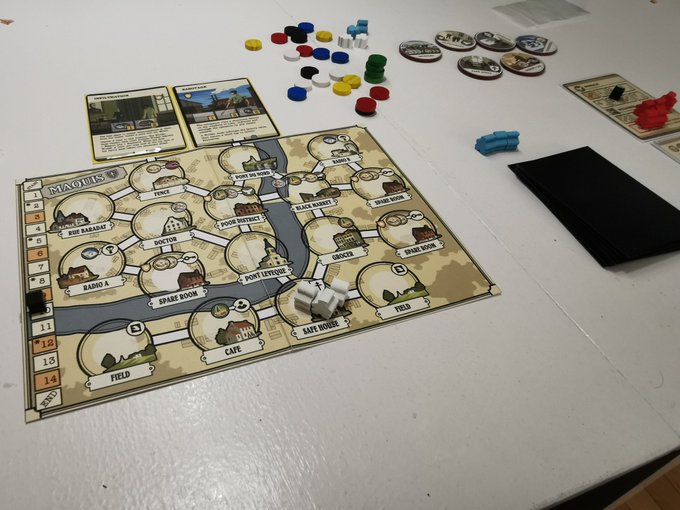
With the whole Covid situation, I’ve finally PnP’d a copy of Maquis (which is awesome and free on PnPArcade!) and played it multiple times, and I’m hooked. It’s what inspired me to write about variable setups, because of how well it’s done it.
Many games have scenarios or opponents or maps, which go from completely changing the game to barely changing anything. My favorite game, Arkham Horror the Card Game, has some scenarios that I actively disliked, and others that I would play multiple times in a row. They vary so much. On the other hand, if somebody plays Power Grid on the North America map and doesn’t like it, I doubt they’d fall in love with the German one.
Another picture by me!
It’s a mechanic that’s old as time, but Maquis does it… perfectly. Every game uses 2 of 14 missions, which, in the end, are just pick-up-and-deliver recipes, just like in many other games. Aside from the resources they cost though, they have very important impacts on the game: – Destroy the Train has to be completed between the 6th and 9th turns; – Infiltration will require you to leave the first worker you send there until you send the second one; – Assassination requires you to eliminate Militia, instead of delivering resources; – Bomb for the Officer blocks two action spaces until you complete it; – Take out the Bridges requires you not only to deliver explosives, but also to take out one of the bridges, which, in a game focused on movement like this one, is a huge problem.
It’s not just about varying what the missions or, but using the missions to change what the game is. It’s not only the fact that those missions support the narrative aspect of the game, but also that, despite using the same system and giving you the same options, they push you in a different direction. They aren’t just “oh this one requires red and this one blue”, which would be fine. They have deep impacts on what you are trying to optimize for.
Imagine that you were playing Ticket to Ride, but one of the objectives you drew, instead of being “San Francisco – Phoenix for 12 points”, was “San Francisco – Phoenix, you can only draw 1 card per turn until you finish it”, and the next was “you have to have 20 trains west of Dallas”. Not only (1) are the missions fundamentally different in what they need you to do, and when they need you to do it; but (2) the impact of completing them is also very different. Finally, (3) they’re not just “12 points”, they are “do this or lose”: you HAVE to interact with both of those missions.
Now, of course, Maquis is a solo game, and a quick one, which means it gets away with stuff you couldn’t pull in every game. The variety can have a huge impact on difficulty, or take you right out of the game at some point: that’s acceptable in a solo game, or it could be in a 2p game with a handicap or an instant victory clause, but as you increase the number of players, being taken out of a game, or starting far behind, can be extremely frustrating. I love the tension, and therefore frustration, that comes from Maquis, but I wouldn’t want it during competitive play.
So here you go, those were three games which, to my eyes, rocked the concept of Variable setup, which completes this 3-part series on the concept. Are you working on adding variable setup to one of your designs?
In video games (and I’m assuming animation in general), a palette swaps is when you create a new character by taking an old one and just changing a few colours here and there: that’s how you get Luigi from Mario, Subzero from Scorpion, and 18 different types of goblins in Diablo. The only difference between them is the colour: they use the same animations, the same code. It started as a way to allow two players to play the same character, yet still tell them apart if they were on the same screen, and it filled that role perfectly. Since, it’s mostly been used to generate multitudes of different characters and items and attacks and enemies, but which all feel the same. Many board games go down that road and offer a lot of empty variability, where things change in ways that don’t matter.
There are three things to keep in mind when trying to build variability in a game: the inherent properties, the scope, and the focus.
Inherent properties
I’ve talked about interchangeability twice before: once in my grammar-as-theme series, and once in Avoiding non-decisions. Inherent properties are the opposite of interchangeability. An element (whether a resource, a card, an action, a faction, any part of a game) has inherent properties if it can be defined without depending on other elements. For example, the tracks in Endeavor have inherent properties: Industry determines which buildings you have access to, Culture determines how many workers you get, Economy determines how many actions you can empty, and Politics how many cards you can keep. The tracks in Terra Mystica don’t: their only differences are which round tiles are present in a given game.
This is where many games fall short in terms of making variability meaningful. Starting with a boost on the Industry track in Endeavor will feel very different than one on the Culture track. It will affect which building I can start with, but limit how many actions I can take. However, starting with a boost on the Blue track in Terra Mystica does not lead to a different game than one on the Red: it only matters in which round tiles will give you income, and on where other players will go. They are different, sure, but only because they will evolve differently.
Picture from the publisher
When it comes to variable setup, your goal is usually to push players into different experienced, but for those experiences to be meaningfully different, they have to have inherent differences. To make sure of it, describe the scenarios, and try to see how many links to other elements you have to make before you use a different verb (or verb phrase), rather than a different noun:
0 link: “In Ethnos, there are 6 types of cards in each game, out of a pool of 12. Trolls allow you to break ties. Giants score points if you have the biggest stack. Wingfolks place their tokens anywhere.
1 link: “In Spirit Island, players will choose a Spirit, which gives them different innate abilities and starting cards (noun). (LINK) This Spirit’s powers allow you to scare away the Invaders, while this one is specialized in defending the land. (verb)
2 links:“In Gaia Project, there are extra scoring conditions if you can do certain actions during a specific round. This one will give you points if you build a Mine, and this one if you build a Research Center. (LINK)A Mine gives you Mineral, and a Research Center gives you Research. (LINK)Mineral is used to build more Mines, while Research is used to improve a technology.
The fewer links you need, the more inherent the difference, and therefore, the more meaningful the variability: each link takes away from that variability both mathematically (because those aren’t perfect relations) and psychologically (because each jump makes it feel less meaningful). Of course, it’s not a perfect relationship, but I use that thought exercise in my designs quite often.
Sometimes, no amount of links will ever come to a difference. There’s no difference in Coloretto between starting with a Red or a Brown card. In that case, that is not variable setup. In Coloretto‘s case, the goal is to have every player start with a different card, which helps make the first round interesting. It should not, however, be considered variable setup.
Scope
Another aspect to consider is the scope of that variability: how much of the experience does it actually change?
As an example of analyzing scope in starting situations, let’s take a look at everything that your choice of Spirit in Spirit Island will give you, thinking about how different they make a game from another, and for how long those differences last:
Starting presence: within two turns at the most, your board presence is virtually the same as everyone else’s;
Income abilities: Minor differences overall. Some provide more flexibility, some less, but they’re all quite similar;
Innate abilities: Very important difference. It’s abilities that only you can do, and they’re rather strong and stay useful throughout the game. They also push you to acquire certain cards, with the icons you need to trigger them. Those are a 1-link relationships, because cards with specific icons will also have specific types of effects, meaning a card with Fire as a trigger will tend towards aggressive cards throughout the game;
Starting hand: Fundamental difference early, but since you acquire new cards quickly, and get rid of those you started with, you will end up with most of your cards being from the central deck rather than your starting hand.
Picture from BGG user TheBratPrince
Add it all together, and those Spirits make Spirit Island a highly asymmetric game. The Innate abilities, however, do most of the heavy lifting. I’d even argue that the starting hands are probably there to support those innate abilities, make sure you have the icons you need and have cards that follow its theme, rather than to increase asymmetry.
When it comes to variability of scoring systems, let’s look at Isle of Skye, which offers you 4 different scoring conditions every game. A game of Isle of Skye finishes with average scores in the 60-90 range. On average, about 10 points will come from stuff unrelated to those conditions, whether leftover money or acquired Scrolls. That means that, on average, about 80% of your scores will come from those variable scoring conditions.
Compare that with Prowler’s Passage, a really neat 2-player game. In it, every game, you choose 3 objectives, and the first player to complete each will get points, between 3 and 6. Players score, on average, about 100 points each. Out of an average of 200 total points, 12-15 will come from the achievement cards, or 7%. How much do these objectives push you to do different things from a game to the next?
Focus
Focus is an aspect that came to me while I was writing the two previous ones. In my earlier examples, I’ve talked mostly about strategy games, mostly Euro ones, because that’s my jam, that’s what I design and play and know. However, if you design a narrative-centric game, or a very puzzly abstract, the scope you aim for and the kind of inherent properties you care about will change.
If I play a fantasy skirmish game, I don’t care whether I play Dwarves or Orcs: what are their abilities? How are they different mechanically? However, if I play an RPG, leading an army of Orcs is going to be quite different than an army of Dwarves, even if, mechanically, they’re the exact same, because different story challenges will come out of it.
Now, I’ve seen many board games where they offer variability, but without focus. Many games centered around “missions”, which are mechanically just recipe fulfillment, resource management things, with very different lore behind them, but only meaningless differences in the recipes you needed to fulfill. Is that variety? Only if the narrative aspect is what matters to your target audience!
I think of Munchkin, where the target audience will consider a Magic Sword and Laser Vision very different cards, even if both just give you +1 in combat. I think of Claustrophobia, which has a few different enemies in it, but many criticize its lack of variety because “they’re all demons”, even if they’re mechanically different. Can’t please everyone it seems…
And that is not just theme vs mechanisms: you can also use that to dig deeper. In a game were movement on a map is key, like Hawaii or Maquis, changing the connections on a map would make for a very different feel, much more so than it would in a game like Godfather: Corleone’s Empire or Spirit Island, where those spatial relationships are important, but secondary.
Being even more of a nitpick: the character in Marco Polo which allows you to choose the value of your dice is exciting in that game, because the game’s focus is one of optimization, and the dice you roll just add that limitation to your turn. That same power in Sagrada would take away half of the puzzliness of the placement, remove from the game’s focus: much less interesting. It’s not that the mechanism takes a different place, it’s that the experience you want the player to have is different.
I always do this: I start with a short article, and then keep on adding on to it until it reaches “geez no one’s ever going to read this”. If you made it to this part, AWESOME! You win a virtual cookie!
So yeah, those are the aspects that I think one has to keep in mind to avoid palette-swap, skin-deep variability: how inherently different are the two things you’re comparing; how noticeable is the difference; and how fundamental to the game is the element you’re changing.
Next week, I think I’ll get into some examples of games which have done variable setup particularly well!
Roadblock is a series of articles where I interview other designers, developpers, and others involved in the industry, to do a deep dive into a specific issue they’ve dealt with in a project. The goal is to add concrete examples to the mass of game design advice out there.
JV: Today I’m sharing with you folks a discussion with Chris Anderson, designer of the Tempus series of solo games and host of The Board Game Workshop podcast. Today, Chris will tell us about an issue he ran into in designing the latest Tempus game, Tempus Infinitum.
Can you give us a bit of background on what the game is like, so readers better understand?
CA: All of the Tempus games are similar. They work like a roll and write, but instead of rolling dice you write down the day and time you start playing and use those numbers to populate the map with resources and obstacles, and also to determine your actions for the game.
Tempus Infinitum specifically has unique maps generated based on a player’s email address.
JV: That random seeding through the date and time is interesting to me. Why not simply go with cards or dice?
CA: The original game design idea that eventually spawned the Tempus system was to make a diceless roll and write. I wanted a game that required minimal materials to play, in this case just a single sheet per player and a pen. The Tempus idea came up as an option for solo play but worked so well I abandoned the multiplayer idea.
Now, the Tempus system is what makes the games stand out from other roll and write games.
JV: The number distribution in dates and times is skewed: no numbers over 3, 2, and 5 for the first digit of date, hour, minute, respectively, for example. How did you consider that in your designs?
CA: That’s the best part of the system. It’s like designing around weighted dice and gives a lot of opportunity that uniformly random dice don’t have. The numbers affect two things in the game: the setup of the map and the player’s actions.
The map is a 10 by 10 square grid. Since we only use day, hour, and minute we have 6 numbers to assign. Each of those is assigned to one column and one row. During setup, each of those columns and rows has an item that will be drawn on the map in the space dictated by the number. So if the first digit of the day is 2, the item in that column will be drawn in the second box down. Zero is always at the end.
Since, like you said, the first digits in day, hour, and minute are limited, this creates empty spaces that won’t get drawn in items. These empty spaces are what make the unique maps.
Picture by ME!
With 10 columns and 10 rows but only 6 numbers, there are also completely empty ones. The digits always go in order, but that still gives 210 possible arrangements for columns or rows. When you combine the possible columns with the possible rows you have 44,100 possible map layouts.
Each of these maps has a different arrangement of empty spaces. In previous Tempus games with only a single map I would choose the layout I wanted and add static items to the empty spaces. They could be obstacles, enemies, resources, or goals. With Tempus Infinitum, though, we are potentially using all 44,100 layouts. So the static spaces and the column and row write in items are arranged by each map’s random seed from a pool of 37 items with some restrictions. The arrangement of these items combined with the different map layouts is what gives us millions of possible layouts. Not infinite, but Tempus Very Large Number doesn’t sound as nice.
The other thing the numbers control is the player’s actions. Again, the unique aspect allows for some control. Each of the 4 actions is assigned a number range. Make a Road 1-2, Dig a Lake 3-4, Build a building 5-8, and use a building 9 & 0. Based on the statistical occurrence of each number in all possible day/times, each action is approximately equal in potential occurrence. But the first digit can only be 0, 1, 2, or 3 and 3 is pretty rare. So almost two thirds of the time your first action will be building a road. Building a road is the most critical action early on, because it’s the foundation to performing other actions. And again with the first digits for hours and minutes we have a restriction on potential actions that skews towards lower numbers and the more important actions of building a road and digging a lake.
So it’s specifically the missing numbers that create the setup and makes each minute a unique puzzle to solve.
JV: Very cool! So getting back to the whole point of this interview: What is the roadblock you ran into? How did you identify it?
CA: The issue with Tempus Infinitum is the variety of possible maps. In previous Tempus games I had a lot of control of how maps were laid out and could balance difficulty by adjusting the layout. Since Tempus Infinitum has to work with millions of potential layouts it’s much harder to control difficulty.
JV: Why is variability of setup particularly important to the game?
CA: Variability of setup is the unique twist that sets Tempus Imperium apart from the other Tempus games. The system has been refined through previous games, but offering every player a unique map makes it much more personal.
JV: Could you expand on that? Why is that worth the extra balancing issues?
CA: I’ve been working on Tempus games for years now and what continues to surprise me is just how much design space they have. Tempus Quest is 13 unique maps in a campaign, where what you do in previous episodes helps you in the future. It was designing those different maps that made me realize how many possibilities there are for the setup, even if you keep the exact same rules.
Tempus Infinitum is my attempt to use all of that potential in one game. It’s definitely an ambitious design challenge. And, at best, each uniquely generated map is no better than an individually designed map.
But, I think the ability to offer players a unique map that is theirs alone, that they can try and master and share with their friends, adds a level of community and metagame that solo games don’t often have.
JV: You coded a tool to help you for the setup: what did you use for that? What do you see as the pros and cons of the tool?
CA: I’m only an amateur when it comes to coding. I use Processing (https://processing.org) to create the individual maps. It’s based on Java and the main benefit is that I know how to use it. I’m pretty sure it’s not the most efficient method for what I’m doing though.
JV: How do you imagine it working in a final product, or will it just always keep that computer generated aspect?
CA: Currently I have to manually run the program to generate the maps. Ideally the tool would be integrated into a website so players can instantly get their unique map.
JV: So this will always stay a PnP? What pushed you in that direction, versus trying to publish a physical copy with 100 different setups in a block of paper?
CA: Yes, the plan is for it to always be a PnP. Since the main goal is offering each player an individual, unique map, it’s the easiest way to get those to them. When testing is done, I’ll set it up as a “pay what you want”. So if anyone would like to support the work, they can. But the biggest reward for me is having people play my game. So I much rather see a picture of a completed game on Twitter than make a few cents selling a pad of paper.
But, with millions of possible maps, most of which will never be generated for individual players, if people would find some benefit from having a printed pad, I’m not opposed to the idea.
JV: Had you ever encountered a similar problem before? Why was this one different?
CA: A lot of my game designs use combinatorics to generate a variety of states, but this is the first to use that in the design instead of just in the play.
JV: And how do they differ?
CA: When combinatorics is in the play, for example having a card game that works with multi card combos, an individual play will work out a certain way, but the next play will be different. So there can be some forgiveness in edge cases that are less than ideal.
When combinatorics is in the design, the generated game is all there is for that player. So a less than ideal edge case will always be less than ideal for the player that got it.
JV: Can you talk about the process of solving your roadblock? What worked? What didn’t?
CA: I’m still in the process of solving the issue of balance.
In early versions I had a lot of variability which led to a huge variance in difficulty between maps. Some players would have 5 enemies to deal with and others would have 10. As I’ve gotten playtester feedback, I’ve restricted some of the variability so that maps have a similar difficulty. The trouble is getting the difficulty balanced while still having a huge variety of unique maps.
JV: And how do you contain the difficulty behind the scenes? Do you define more closely how much of each thing will appear, or do you go with a point system to evaluate how “positive” a setup is? (or anything else of course)
CA: In the first version, the item in each space was chosen independently, similar to a die roll, so my only control was adjusting the statistical chance of an item being chosen. This caused the huge variance. Now all the items are selected from the same list of 37 items, similar to a deck of cards, so only the arrangement differs between maps.
I’ve also added restrictions on where certain items can appear. Currently the restrictions I have in place limit only certain items to being in the write in spots or static spots. When it places items on the map it will always place an enemy after a farm. This increases the likelihood that enemies will be next to farms to start, increasing the difficulty. But still has potential to leave a space between them depending on the map layout.
A player request was to have a target score scale so players could tell how well they did. So a potential addition is to have a unique scale for each map based on its difficulty. So on an easy map, 150 is a great score. But on a hard map, 60 is great. This would be a great way to make all maps comparable. But it requires being able to accurately judge the difficulty of each setup automatically during creation.
JV: It feels to me like a variable setup is particularly important in a solo game, where you can’t rely on player interaction to make games play differently. What do you think of that statement?
CA: I think it is important for replayability. A solo game with a single setup is fine for a single play, like a puzzle or choose your own adventure. And could potentially get a few more plays if you want to fix mistakes and get a better score. But the interest to play drops off sharply. Variable setup makes each setup its own puzzle to solve while still rewarding skills and strategies learned from previous plays.
JV: Where else do you want to take the Tempus series?
CA: Once I get the map generation figured out for Tempus Infinitum, I’d like to make new ages for it. Currently it’s set in a vaguely medieval age with castles and farms. I can see making slight adjustments to actions and setting, like I did in Tempus Quest, and getting millions of new maps to play.
But my greatest hope for the Tempus system is that other designers will use it. So far I’ve heard of one designer trying to make a game with it, but I’d love to see what others can do.
JV: Is there a game that you think does this variable setup particularly well? One that you could point designers to so they can learn from it?
CA: Friday by Friedemann Friese. It’s a solo game where you work your way through a shuffled deck of benefits and threats. So each game will be a different order but the things you learn from each play about how to deal with threats will inform your future plays.
JV: Well thanks a bunch Chris! I’ve been thinking about trying and making a solo game during the confinement, and I’m sure I’m not alone in that situation: surely this discussion will be helpful to many a designer!
There are three lines in board game ads that are way too common, to the point of being ridiculed on social media whenever they come up:
“Minute to learn, lifetime to master“
“Never-seen-before mechanism!“
Those two I understand: too often, it’s mostly empty marketese and proof of somebody who hasn’t been around the board game sphere, the kind of naivety which suggests a less-than-stellar game. Sure, sometimes it’s true, and when it is, those qualities do have great value, but the words themselves have lost the benefit of the doubt: show, don’t tell.
The third one is “Over 100,000 different setups!“, or any other similarly high number, often followed with “no two games will ever be alike!“. The goal is to present a highly re-playable game, with a broad spectrum of experiences to deliver. Variable setups, and their close cousin modular expansions, are a divisive thing in our hobby, but boy oh boy do I love both.
First, just so we work off a common definition, I’ll define variable setup thus:
Variable setup is when a game’s starting state changes from one game to the next, in a way that is known to the players.
This definition therefore includes modular boards, starting resources, available actions, special abilities, or goals, but not the order in which the cards in a shuffled deck are ordered, or objectives which are revealed later in the game. And of course, it’s a spectrum, going from starting with a different card in Coloretto to playing an entirely different game with the same system in 504.
Picture from 2F-spiele
To me, variable setup is an asset in games I buy, and an objective in games I design. Yet, many choose to mock games which advertise it as a main selling point. There are a few good points that come out of the mockery, which is why I wanted to spend a post to discuss it. I would group the mockery in 4 general threads, each containing a nugget of truth:
Who cares, just focus on making a good game!
Why bother? People only play games once these days!
Variability should come from the game itself!
How many of those 100,000 are actually different?
Each of them brings up an important characteristic of setup variability, each with its own pros and cons:
Not everyone values variability. A lot of people prefer a game with a more limited and defined scope, which delivers a specific experience every time. Furthermore, many see variability as dilution of the product: if the game delivers 10 different experiences, how much design time has gone into each of them?
Now personally, I very much disagree. Of course, some games have gone too far with the variability, and made a hundred mediocre games instead of a great one. But that being said, a strong core which you can then go down multiple paths in is something that hooks me and keeps me coming back.
Many people only play games once. Yes, that’s true: if you’ll only play a game once, just give me a single setup, it’s much simpler, much cheaper, much quicker.
That being said, I see that situation as a challenge to overcome, not as a reality you have to follow: very often, after a playtest of With a Smile & a Gun or Off the Record!, I’ve had players look through the power cards, and just go “oh yes, I want to play again with this one”. After them having a good time, having their interest piqued is the best way to get a player back to the table, thinking “oh what else does it have in store?”
Variety can come from other sources. It can. Player interaction is a great way to surprise players even after repeated plays, so is randomness. Those can make sure that no two games are ever the same.
That being said, a variable setup is not only a source of variety: it is also a strategic puzzle in how you react to it. Just like player interaction is about reading your opponents, and randomness is about pushing your luck, a variable setup is about evaluating the situation, and which paths are advantaged or not in a specific game. Sure, you may not like that, just like I don’t particularly like having to mitigate die rolls to determine success.
Variability is not always meaningful. My gateway into board gaming was Dominion. In it, each game is centered on a different set of 10 cards, from a pool of roughly… 400 different cards now? That being said, not every one of those setups is significantly different: if you have access to Gardens (which score points based on the number of cards in your deck) and Workshop (which allow you to gain more cards per turn), that opens up that strategic path, but whether that 10th available card is a Village or a Market really doesn’t change much. Meaning that out of millions of setups, you probably have closer to 100 meaningfully different ones. That’s still a lot, but that 100 is what I care about, not the more often presented millions.
That obviously begs the question “what makes variability meaningful?”, which, I swear, I’ll get into… next time. Just let me wrap this one up first.
So no. variability in games is not a marker of quality, just like meanness or puzzliness aren’t. However, when done well, it is a feature of a game which many (including me) enjoy: those moments of “wow, they can use this system for THIS too?”, or “Ohhhh, can’t wait to try out this faction”. It’s the exploration factor, the learning new things constantly, but also the adaptability: “yeah do you mind if we don’t play with the Skeletons in this game, I don’t really enjoy them”. Done!
Some have described it as breadth rather than depth, as exploring rather than mastering, but I think it belittles the strategic aspect of evaluating each setup and how it will affect the game: whether it’s looking at where the starting cubes are in Pandemic, which combos you have in your hand in Agricola, or the objectives available in a game of Gaia Project, I personally love the adaptability it requires, how much it pushes you in different directions.
Not for everyone, but most definitely for me. And hopefully for others, because boy oh boy are they central in the games I design.
Roadblock is a series of articles where I interview other designers, developpers, and others involved in the industry, to do a deep dive into a specific issue they’ve dealt with in a project. The goal is to add concrete examples to the mass of game design advice out there.
JV: Today I’m sharing with you folks a discussion with the bluest beard in board games, Peter C. Hayward! Peter is the president of Jellybeans Games, and the designer of awesome games such as Bugs on Rugs, Ninjitsu!, and Village Pillage. Peter and I talked about issues he ran into while working on his latest party game.
PCH: Hey JV! So I’ve been developing a party game called French Toast, and I kept running into this weirdly specific issue: the game only works when people go FAST, and as soon as I started blind testing it, people would go veeeery slowly and have a bad time.
JV: And can you tell us about the game? How does it play?
PCH: OK, so I am the Toastmaster. I draw a noun card and you have to guess what it is. You say a word, for example Car, and I will say whether the word is closer to French Toast or to a Car. Then you say another word, and I’ll compare the two, and on we go until someone finds it. You get closer and closer and closer.
The game works best when you quickly guess a noun, just rapid fire, guess-word guess-word guess-word, but people would just go “do I want to guess train? Oh, we’ve already guessed car, maybe it’s too close, maybe we should try and guess cabinet to open up so and so” and then the game just dies. People for some reason just start valuing their guess, acting as if they were limited (which they aren’t!), and then it gets boring. If I’m around the table, I can manage that, but learning from the rules people couldn’t get to that point.
Which also means that I wouldn’t have spotted that problem without playtesting. I blind playtest waaaaaaaaaaaay earlier than most people would, and way more often, so I got my rules out and tried to get as many people to learn it from the rules, because that’s how you learn the game when it gets to you!
JV: Does the game include a scoring system or is it just Win/Lose?
PCH: There wasn’t one originally, it was just whoever would get it would go for the next round. Eventually, I added a hint system to avoid situations when the Toastmaster would just get stuck over and over on just one word, and then there was this scoring system which was just however many hints you did not use are how many points you’d get.
JV: So there’s no limit to how many guesses you can take? There are no incentives to use fewer, they truly don’t have any real value, but for some reason players assumed there was? If it takes you those 30 seconds to think of one word, you could have just blurted out 10 words during that times and gotten a lot more information.
PCH: Exactly. You have to treat your guesses as disposable. It progresses the game so much faster.
JV: And so why do you think players assumed that those guesses should be used sparingly?
PCH: Part of it is that the game would go around the table with players taking guesses, so after your turn, in a 5 player game, three people will go between every one of your guesses, which makes you not want to waste that shot.
That being said, if everyone goes fast, your turn will come back in 15 seconds, and so you don’t care about “wasting” it. However, it’s a vicious circle where if one player slows down, everyone starts cherishing their chances more, and takes more time, and so gaps between turns increase, and so on.
JV: That makes a lot of sense. Once you realized that problem, if we were to go step-by-step, what did you try?
PCH: So the first impulse of any game designer is of course to blame the players. “These players are dumb, other people will get it!” But the thing is, especially with a party game, it needs to be accessible. If anyone plays it wrong now, it means someone WILL play it wrong. And I say “wrong”, but the game is at fault here, not the players.
So my first attempt at a fix was to brute force it: I literally wrote in the rule “Go fast”, “Guess quickly”, “Don’t think about it too much”, “Don’t value your guesses”, but no matter how many times you write it, it doesn’t mean people will do it, as nice as that would be.
The next thing I tried was grouping people. If you play with 9 players, that’s 8 guessers, and so you have to wait for 7 people to go before you would, and that’s way too long. So I just made pairs, thinking it would just half the time between guesses. The problem is, suddenly, instead of being a problem some of the time, it became a problem ALL of the time. People now HAD to discuss their guesses with their partner: “should we say this?”, “what do you want to say?”, which dragged it out even longer. I tried the opposite, splitting them into 2 teams instead of teams of 2. It was the same problem, but you would now discuss by committee, and a team of 4 takes a lot longer than 2 teams of 2 as it turns out!
I went back to individuals, and I put a timer in, and you could take as many guesses as you wanted in that 30 seconds. That meant that you never were waiting more than 30 seconds times the number of other players, and you were incentivized to go as quickly as you can: perfect! However, people would never use the second half of their timers, because as you get closer, you’re helping your opponents, and then it won’t get back to you. They’d literally just wait for their time to run out, and you don’t ever want people who deliberately DO NOT play your game.
At that point, I went back to teams, but with that 30 second-timer for the team as a whole. People would then get cranky at their teammate if they took any amount of time, or, if they shared that time anyway they wanted, one person would often end up hogging the spotlight and take all of the guesses themselves, both of which were pretty terrible.
Then I also had another problem I wanted to solve: you know how in Codenames, you play a game, and then go again with the same teams, changing the Spymaster? Well I never did that! I always played every game as separate, switching up the teams, and I planned on French Toast being like that, with the Toastmaster a neutral referee in the affair. However, most players would play round after round with the same group, and so the Toastmaster felt an obligation to “their” team. The shared Toastmaster caused this unforeseen social problem, because players were thinking of it as a team game.
The next move was just making it a pure coop. Anyone can guess, as long as you don’t guess twice in a row. People responded very positively, I was really surprised. Some people are like me, they just want to spit out answers, but some people like to sit back and think about it, but when they jump in it’s something that really saves the day.
That really worked, and actually the coop version will be in the box as one of the modes, but I found myself missing the competitive nature of it. I also found that as everyone was working on the same time, people would get stuck more often, and what you get stuck the game just stops being fun. There was something about taking those 30 seconds off to let the other team go that would give you some distance and un-stick you.
Recently I was at a con, I sat down and said “I want a team vs team mode, you folks are designers, make this work for me”. And it was very simple, they just had two Toastmasters, one for each team, shared word, and I was CERTAIN it wouldn’t work-if I think Radio is closer to Car than Train, doesn’t mean that you do, and so we’d just be fighting for direction. For some reason, that didn’t ever happen. I kept the same rule from the coop where you can guess in any order, as long as no one guesses twice in a row. So far, that’s the version of the game that will go in the box.
JV: What about the Toastmaster? Did you have to push them to go faster at all? I feel like I’d take forever on those, plus with the stress of everyone staring at you.
PCH: So interestingly, them hesitating is interesting. When they’re stuck, when they’re thinking, it becomes fascinating for those who are watching, because that hesitation is telling you something. Maybe those are two very good guesses, or two equally poor ones, but it’s information. It’s only a problem when the guesses are slow, because that is not progress.
Also, people tend to give answers faster than they take the guesses, making those hesitations even more interesting.
JV: If another game designer reading this was struggling with players who aren’t playing the game in the most fun way, what would you suggest?
PCH: So that’s something that can happen in a party game or in a heavier strategy game, but it’s really about figuring out what the fun part is (in my game, play it fast), and then “Game design is incentive design”. In the old system, players were incentivized to value their guess, because they personally only got one of every 4 or 5 or 10. To incentivize going fast, I added that timer, and removed the rigid turn structure, and suddenly you don’t have a reason to go against the fun.
In a party game especially, it’s less about throwing points at them, it’s really about the social dynamics that come up, like pressure and attention and politeness. Incentive becomes a more nuanced concept then.
I had a similar problem in Scuttle!, my first released game, where players would forego special ability cards and just focus on big point cards and win. When I worked on Ninjutsu!, which is the second game in the series, you win by having big cards in front of you at the start of your next turn—meaning that now, it’s not just about playing those cards, but timing it accordingly.
JV: Well Peter, this was amazing. I’m in awe of every that goes in this process of designing a party game. It seems to me like you’ve perfected mind control, and have decided to use your powers for good!
French Toast will make its way to Kickstarter soon, but Peter does have another party game on it right now: Night of the Mummy!
Roadblock is a series of articles where I interview other designers, developpers, and others involved in the industry, to do a deep dive into a specific issue they’ve dealt with in a project. The goal is to add concrete examples to the mass of game design advice out there.
JV: Today I’m sharing with you folks a discussion with Jay Cormier, half of the design team behind Belfort, Junk Art, and In the Hall of the Mountain King, and now founder of Off the Page Games! Remember when Sen-Foong Lim talked about designing MIND MGMT? This time, we’re switching it up a bit as Jay will describe issues he ran into as a first-time publisher while working on that very same game!
First, can you give us a bit of background on the game at the stage where you ran into the issue?
The game is a one vs. many game, in which one player will secretly move around on their own hidden map, while the rest are moving around on the big board, asking questions to deduce the one’s whereabouts. The problem came up as soon as I became a publisher of this game. When we were the designers we actually said, “Oh that’s the publisher’s job to figure that out!” Little did I know that I would be that publisher!
JV: What was the problem, and when did you first encounter it?
In the game, when the rogue agents ask a question to the one recruiter, the recruiter answers if they’ve been to any location with the requested feature (each feature appears 5 times on the board). If the recruiter HAS been on a location with that feature, then they place a Step token on one of those locations. But if the recruiter has not been on a location with that feature, they say no….aaaaand….that’s it. Or so we thought. While playtesting the game we realized that players wanted some way to keep track of this information. In a deduction game, not getting a success can sometimes give you more information than getting a hit!
Example: If an agent asked the recruiter if they have ever been to a location with a Subliminal Billboard and the recruiter says they have NOT, then that’s a lot of information! This means that the agents know 5 spaces on the board that the recruiter has NOT visited up until this turn number (there is a time track off to the side to know exactly which turn it is).
So we started coming up with some ideas. Maybe one of the agents gets a notebook and that player can write notes down on a restricted size of paper. This didn’t really work because it wasn’t intuitive and players would forget — either to write it down, or to refer back to it later. Then we thought, what if the players also had a secret map? A duplicate of the board that was also dry erasable, so they could make notes on it. This was maybe a bit better, but still, only one player could really look at it at a time, and so it would be forgotten.
So then around this point is when I became the publisher of the game, and now I had to figure out how to do this! For awhile I was thinking I would have numbered tokens that would be placed on the board, possibly fitting into grooves or holes in the board. This proved to be costly as well as fiddly since there would need to be so many tokens. Also, it wasn’t versatile enough since it couldn’t say exactly what a player would want to say.
And that was probably the ‘a ha’ moment. If we want players to ‘say’ whatever they want on these tokens, then maybe these tokens need to be dry erase. We tried giving players dry erase tokens to use, and wow — what a difference! The game really came alive. Now all players could ALWAYS see the information that they have collected. No longer was the game about remembering information about where the recruiter had been or had not been to. Now players could see the hits and the ‘misses’ on the board, and this really helped the agents narrow in on the recruiter’s path!
To clarify, when the recruiter now says that they have NOT been on a Subliminal Billboard, the agents then write out “1-8 X” (where 8 would be whatever the current turn number is) onto 5 different dry erase tokens (which we humourously call, Mental Note Tokens), and place on on each location that has a Subliminal Billboard. For the rest of the game, the agents can now easily see that the recruiter hasn’t been on those 5 spaces up to turn 8!
JV: Had you ever encountered a similar problem before? Why was this one different?
There was another similar issue about components. It was with our Step tokens. Originally we had 16 different Step tokens – each with a number from 1 to 16. When the Recruiter placed a Step token onto a location, they had find the Step token with the correct number (the number that matched the turn that they visited that location) on the bottom and then place it in that location that they have visited. I tried a bunch of different ideas, and used some Facebook groups to brainstorm how to solve this (maybe it was a plastic token that had a hinge that folded out to reveal the number inside it). Once we came up with the Mental Note tokens we realized we could use these for our revealed Step tokens as well.
So now we just needed generic Step tokens that didn’t have a number below it at all. Then when that Step token was revealed during play, the recruiter would announce which turn they were on that location, and the agents would use a Mental Note token and write that number on it. Worked perfectly and was way less fiddly!
JV: For a designer who does not intend on self-publishing, how do you think a publisher would react to a game requiring dry erase tokens or boards? We’ve seen a few of them recently –Silver & Gold, QE, Just One… As a publisher, would you see it as a plus or as a pain?
There is a pain side to dry erase (finding markers that don’t dry out too quickly, responding to numerous customer issues about dried out markers!), but I think the idea is — whatever is the best way to make the game work in the most functional and unique way possible. The game needs to be functional first and foremost. If the dry erase isn’t necessary and is only a nice-to-have, then I’d question it too. But if the dry erase is 100% needed to make the game work in the most efficient way, then it makes sense. It’s more cost effective and more environmentally friendly to use dry erase instead of tear-away pads that you’d use and then discard.
JV:We often talk about components in terms of table presence, but here those tokens are really mostly about making the players’ lives easier, taking a process that was annoying and forgettable and making it simple and straightforward. What would be your favorite component that just makes players’ lives easier in another game?
Great question. Can I say Game Trayz? Any time they’re involved in a project I get excited because they have such an amazing eye for functionality and improving the playing experience. The setup time is always reduced as you don’t have to open numerous baggies and dump out resources or tokens, and the functionality is often improved, while table space is preserved. For In the Hall of the Mountain King, Game Trayz make setting up the game super easy! All the tunnels are in this tray, all the resources are in this other tray! The Great Halls are stored in the bottom tray – but then they actually stand up in the tray so you can see which ones have been taken and which ones haven’t. Clever!
JV: Before stepping into the shoes of the publisher, how much would you try to tackle those kinds of component-based issues, whether before a pitch or working with a publisher on solving it?
If we could come up with some sort of component that was eye catching and helped get publishers excited, we’d do it. For Junk Art, we had to make all the unique pieces, so it had to be impressive and work immediately. For Akrotiri, we made little boats that held the resources as you moved them around. Our goal is to make the components and the prototype functional to ensure the game can be played as easy as possible. If the Akrotiri boats couldn’t carry the resources, then that would have negatively impacted the experience as you would either have to place them next to your boat or come up with some other solution.
JV:Well thank you very much Jay for this. It’s a very different perspective when we tackle those issues from the perspective of a designer of your pedigree who self-publishes. You brought up many good points for me to reflect on. Thank you and best of luck with the MIND MGMT Kickstarter!
In addition to the MIND MGMT Kickstarter, Jay runs a series of videos about self-publishing which are fascinating, and great insight about what it’s like to launch a business in this industry.
Power Grid is one of my favorite games, and despite how much I love it, I still get annoyed at the auctions: “I bid 16”, “17”, then people just count up for minutes, increasing the time between each number is called, and often making faces. While I can appreciate those faces, often, those parts of auction games often just end up… boring. They’re slow, there’s very little tension, you can’t plan ahead too much, and as soon as you drop out, you don’t really care much about the rest of the auction.
Now some people love those auctions. I don’t know why, but some do, and that’s fine. If you like them, then go ahead, you have my blessing! However, if you don’t, then let’s take a look at a few ways you can address this problem, and games which have done it.
One caveat: I don’t like Modern Art much. I won’t mention it here. It probably does most of these, feel free to add it to all of these examples if you care. I don’t think I missed any twists that ONLY Modern Art does. I’m also not talking about blind bidding, because that is an entirely different mechanism.
Incentivizing players to make their best offer: Part of the problem is that auctions are about players getting more value than what they paid. What that means is that what you’re encouraging is to low-ball as much as the players can get away with: maybe they’ll win with a ridiculous bid, or, worst case scenario, they’ll bid higher later. That focus can be interesting—it’s a great moment when you can pull it off–, but it can also be very tedious.
The simplest way to mitigate that incentive is to make the auction go around only once, like in Goa, Ra, or The Estates. One player starts the bid, and every player gets a single chance to bid. Usually, the player who started the auction will have the last word, incentivizing them to start the bid on something they’re interested in because of how strong that final say can be. It kind of pushes you to go as high as you’re comfortable going, and to assess other players’ desire for it: can I get away with a lowball? In my experience, once around auctions are not quicker than the standard ones, because each decision takes a lot longer, but they are a lot more tense.
Picture by BGG user Pedro Vaquero
In between Infinite and One, there are other ways to limit how many bids your players can make. For example, in Infamy, each time you bid you pay 1$. If you get outbid, you get your bid back, but that 1$ is lost, representing the time and energy it took to actually get to the person you’re trying to bribe. It’s a less draconian way of doing the once-around: you still get a second chance, but you still would have been better off nailing it on the first try.
Picture from BGG user Daniel Thurot
Even more nuanced is the way High Society does it: you have a set of money cards which you cannot break down into smaller denominations. Once you play a card, increasing your bid requires you to add a card, without changing what’s already on the table. If you bid high early, you still have all the versatility of your smaller values, but you have a very limited amount of those.
Incentivizing dropping out: In the end, an auction a “Last one standing” situation, and so making sure people drop off quickly can make the auction go faster. For example, many games give something to players who do not win an auction: in Dream Factory and Rising Sun, the winning bid is split up between the auction losers. This is interesting for two reasons: one, because it’s a catchup mechanism as well as an auction fixer; but also because it adds a very important layer of strategy in how much money you give your opponents, which they can then use on the very next auction against you. They also make you care after you drop off, because it still determines how much money you’ll get.
Picture from BGG user Christian Monterroso
For Sale does a similar thing, although it presents it differently. Instead of rewarding the dropper, it makes players want to avoid being that Last one standing, because that player pays the entirety of their highest bid, while all other players only pay half. There’s more nuance there, but as far as the auction is concerned, that’s pretty much what it comes down to. Taking away the card aspect, it’s very similar to the previous twist mathematically (you spend less vs getting new money), but it also feels veeery different. While mathematically, giving money to your opponents is a much bigger swing than getting that 50% discount, it doesn’t feel as bad. Loss aversion is such that you don’t care about others taking your breadcrumbs, but you do care about paying double what others are.
One thing I did in one of my prototypes (which never went very far) was to make dropping order during the auction phase the turn order during the worker placement phase. Players would often be just as happy passing as they would be winning the auction. However, after the first player had passed, or the second in a very high player count game, that incentive would be close to worthless, which actually encouraged the other players to keep on bidding even further: sure, they could get 3rd place now, but if they weren’t going to get 1st, they should at least get the prize of the auction! Sunk cost fallacy is a tough one to avoid…
Limiting your decision space: Part of what makes auctions take so long is how granular they can get. In Power Grid, the game doesn’t progress much between a bid of 25 and one of 30, yet that probably took going around the table two or three times.
A simple way of increasing that is to lower the numbers. If you have 100$ in hand, bidding 14 or 15 doesn’t change anything. If you have 20, then that can make a bigger difference. Since most games deal in whole numbers, lowering all numbers in your game can have an impact by making each unit matter more.
Some games pre-set the possible values you can bid: in Amun-Re or Stockpile, the potential bid values are predetermined, meaning you don’t have to choose between all the numbers that exist, only those 8. Also, in both games, those available amounts follow the triangular sequence (0-1-3-6-10-15-21), meaning that the higher you bid, the more it takes to outbid you, incentivizing you to put your best offer early.
Picture from BGG user Tom Delme
In a similar but less restrictive vein, Cursed Court requires any outbidding to at least double the previous bid. Given that you only have 20 coins to spread around 4 bids, there’s a lot of interesting psychology that comes in.
In Ra, you can only bid one of your tiles for the value on it. Unlike the previous examples, here each player faces different limits. Bidding a 6 when your opponent only has a 5 and a 12 forces them to outbid you by a LOT. This not only a great way to accelerate auctions, it also causes a lot of tension in those moments.
What is your take on count-up auctions? What is your favorite twist on auction mechanisms?
Roadblock is a series of articles where I interview other designers, developpers, and others involved in the industry, to do a deep dive into a specific issue they’ve dealt with in a project. The goal is to add concrete examples to the mass of game design advice out there.
JV: Today I’m sharing with you folks a discussion with Daniel Newman, designer of Dead Man’s Cabal, Rolled West, and Ahead in the Clouds.
JV: So Daniel, what game are we talking about today?
One of the games I spent a good portion of 2019 on was called Nebula, and then later The Well. It started with an idea for an action selection mechanism that I came up with while driving to Granite Game Summit. It involved a tray for 8 action tokens with a slider to select which actions you can do that turn, but depending on what ring of the board you were in you were limited to 4, 3, or 2 actions. I thought it would be cool to have a game where your position on the board would determine your effectiveness, with the fewer actions gaining you higher value rewards.
The first thought I had thematically was mining an undeveloped Nebula. I came up with a couple of generic resources (gas and minerals) and structures needed to harvest those, and actions revolving around moving through the nebula, building structures, and using those structures. It was…fine. I had a couple of people in my playtest group who said they enjoyed it but it didn’t really feel like it was doing anything special. I put it away for a bit and then had an idea to rework it, using the same general idea but with a hand of cards that cycled similarly to Concordia, and rethemed as spelunking in a cave system called The Well (because it was 3 layers of concentric circles). I thought it was more interesting and definitely had a better table presence. I generally got a better response with this reworking in the group as well, so was feeling pretty good about it by convention season.
JV: What was the problem, and when did you first encounter it?
I thought things were going along nicely, that it was pretty much ready to pitch. I showed it to a publisher at BGG.con and it was a disaster. It didn’t play anything like I thought it should. Things I thought were super clear were not. The publisher I was showing it to seemed angry and agitated for the entire game.
I realized that so much of how I wanted it to be played had been internalized by my regular playtest group – they had all played it a bunch and were just ignoring the obvious problems with it because they were familiar enough with the systems. It felt like it was smooth because of familiarity not because it actually was.
Because it’s so easy to bring things to this group twice a week, i don’t usually seek testing outside of the group.
JV: How did you handle the situation with the publisher?
We wound up finishing the game, as it was, and then I apologized for the experience being so bad. This is someone I show games to regularly so I was a little surprised at his reaction, but it just had a number of things in it that he really doesn’t like in games. He assured me that it wasn’t me personally that he was upset with. He’s someone whose opinion I very much respect, so seeing that reaction really convinced me it was time to shelve this one.
JV: Had you ever encountered a similar problem before? Why was this one different?
Not really. I tend to have a pretty good sense of whether or not a game is working, despite what feedback I’m getting from testers. I think I just really wanted this one to work even though it was never really feeling like it was coming together. This was also an unusual one because I tend to use an existing game as a starting structure and base my design on that – obviously things change pretty dramatically pretty quickly, but that tends to get me going much quicker and makes it so I don’t have to reinvent the gaming wheel every time. When I did the ground-up reworking as The Well, I used a couple of games as models for the systems I wanted to use, but it still never came together properly.
JV: Can you talk about the process of solving it? What worked? What didn’t?
Honestly, I never really solved it. I’ve shelved it indefinitely. Sometimes it’s the right thing to just put it aside. Maybe I’ll come back to it, I probably won’t. I have at least half a dozen games on my prototype shelf that I just decided wasn’t worth working on. There are a couple of nuggets of goodness in them, but I had another idea I wanted to work on and just didn’t want to devote more attention to this design that wasn’t working out.
JV: When did you decide to let it die? Did you try some stuff before then, or did that one pitch taint it so badly it turned you off the project entirely?
I’d been trying lots of different things over the life of it and nothing was really feeling right. The bad pitch was the nail in the coffin. I had scheduled a pitch meeting for it with another publisher later in the week and cancelled it because I just no longer had confidence in it as a game.
JV: And how do you avoid that problem with other projects? Have you changed your way since or was it just the exception?
This was actually very recent, just a few months ago, and one of the last games I pitched. I’m still mulling over exactly what went wrong in the process, as I had never had this happen before. I think I’m just going to be more aware of how many different people play my games before I bring them to publishers to show.
JV: In general, what do you think are the Pros and Cons of having a small but regular pool of testers?
Obviously it’s great to be able to get your design on the table super frequently. You can make a lot of progress in a short period of time, especially in that early stage when you’re constantly iterating and making big changes. If it’s a group that meets twice a week, like mine does, you can also not feel terrible about skipping one or two now and again because you know there’s another in just a couple of days (unlike groups that only meet once a month, in which case you’re going much longer between tests).
On the down side, you wind up testing with the same people over and over again and you can develop a meta where people generally understand the game and only slightly adjust to the new tweaks every time and are playing generally the same way. You just don’t get as much variation in approaches to the play and can miss huge problems because people get too comfortable with the game.
JV: How did you develop that “small but regular” pool?
I happened upon it kind of by accident, actually. This was a group that already existed and was meeting about once a month before I joined and started meeting once a week around the time I started attending. There were some fairly well known designers as part of the group, who I didn’t know when I joined, but later found out they had put out some fairly popular games. The group really started to flourish when Gil Hova (one of the aforementioned designers) took the reigns and started spreading the word a bit more. A lot of it was just due to better organization and finding a better, more reliable place to meet – the open seating at a Whole Foods, as a matter of fact, one of the few large semi-public spaces in NYC.
JV: You talked about usually starting from an established game: how does that usually happen? I have this list on my phone of games I want to “fix”, to design a different game based on the same central mechanism. I usually love half of the game, and hate the other half with a passion. How do you handle that?
It’s a bit different for each game but lately it’s either “I really like this game but I don’t like how ‘x’ works, so what if I take this mechanism and do something else with it” or “I have this theme that’d be fun to make a game around and I really like how ‘x’ does it, so I’ll just borrow that and change it up and use that as a starting point.” Usually it’s some sort of combination that happens simultaneously. How much I borrow or start with really varies depending on what I need and what else I have in mind. For example, the game I’m currently working on ostensibly borrows the upgrading of tiles from The Taverns of Tiefenthal but now that I’m a few iterations in it doesn’t really feel that similar. The rest of the game is pretty remarkably different.
JV: Well thank you for your time Daniel! You made a few very good points about varying testers, saving face after a bad pitch, and starting a design from an established game. Aside from being a bit of a bummer, I think you also brought up an interesting, under discussed aspect of game design: sometimes, you just have to admit defeat.

/pic4538993.png)
/pic5322473.jpg)
/pic1467067.jpg)
/pic2698780.jpg)
/pic4996384.jpg)

/pic3304125.png)

/pic4007969.jpg)
/pic5004786.jpg)


/pic2651235.jpg)


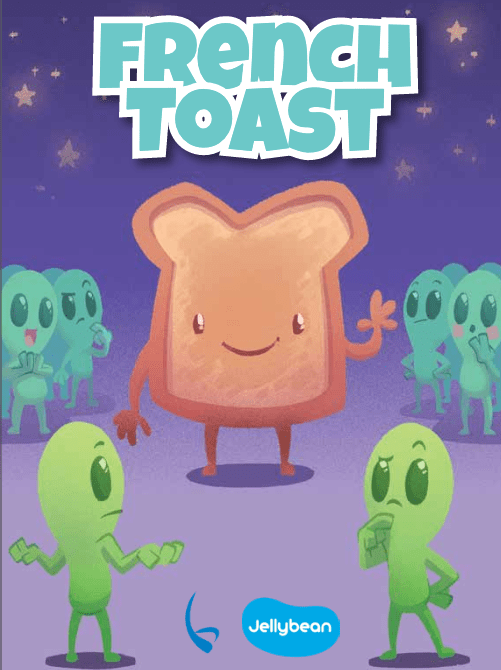

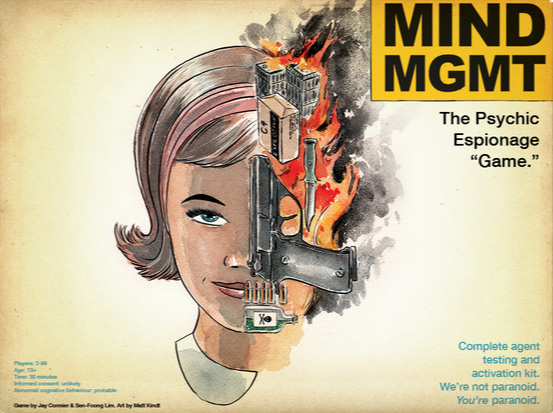
/pic1219770.png)
/pic4199030.jpg)
/pic152089.jpg)
/pic212630.jpg)

 Subsurface Games